February, 1874. A steamboat travels down the Ohio River and offloads a box at a city wharf.
It is addressed to a person who doesn’t exist.
For days, it sits there. Unclaimed. Unnoticed… until the smell becomes impossible to ignore.
Driven by self-defense against the odor, the wharf employees finally pry the lid open. Inside, they do not find merchandise.
They find a man.
Or rather… they find what is left of one.
The head had been sawed open. The arms and legs severed. The fingers removed. The entrails… gone
An inquest was held, and the truth was quickly discovered. This wasn’t a murder in the traditional sense. This was a “Medical College subject.”
The body was buried by the city… likely, as the reporter noted, only to be dug up again a day later.
In 1874, New York City was mostly free of this chaos. Their morgues and charity hospitals provided enough “material” for the amateur surgeon’s knife.
But in the Midwest it was a different story.
Here, body snatchers operated in nearly every city and town. They worked with a boldness born of immunity.
When a resurrectionist was caught digging up a subject, the medical fraternity didn’t condemn him. They bailed him out. They hired the best lawyers money could buy.
Justice was thwarted. Bodies were shipped like lumber, by express, from city to city, fueling a hungry industry that asked no questions.
We like to think of the history of medicine as a clean, linear march toward progress. But the foundation of American surgery was built in the dark. It was built on theft, on grief, and on a secret war between the sanctity of the grave and the demands of science.
From the amateur ghouls of the early 1800s to the professional crime syndicates of the early 20th century, we are going to explore how the dead taught the living.
This is the gruesome history of body snatching in the United States.
The Life & Death of “Old Cunny”
In the mid-19th century, Cincinnati was known as the “Queen City of the West.” It was a boomtown—a place of industry, shipping, and rapid expansion.
But every Queen City has a dark underbelly. And in the shadowy corners of Cincinnati’s graveyards lurked a man who would become the most notorious resurrectionist in American history.
His name was William Cunningham. But to the locals, the police, and the terrified children who whispered his name, he was known simply as “Old Cunny”… or even more chillingly: “Old Man Dead.”
Cunningham was of Scottish origin, a man carved from granite and spite. He stood over six feet tall—gaunt, angular, and bony. He dragged a lame leg behind him, a distinct limp that shuffled on the wood-paved streets late at night.
His head was massive, covered only by a few straggling gray hairs. His nose was hooked like a beak, and his eyes… witnesses described them as steel gray, glittering like a serpent’s.
By day, Cunningham was a simple express driver. In the summer months, he hauled legitimate cargo, blending into the bustle of the city. He had a wife and children, and lived in a small cottage on an isolated flat of land in the western quarter of the city.
But when the leaves fell and the ground hardened… the doctors sent for him.
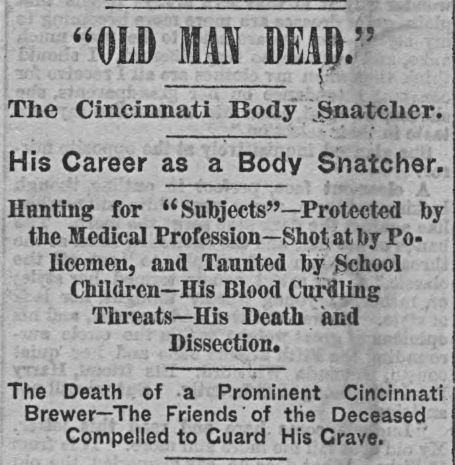
From 1855 until his death in 1871, winter was Cunningham’s busy season. Night after night, while the city slept, “Old Man Dead” went to work.
Cunningham was not a misunderstood rogue; he was a monster, plain and simple. He was a cruel husband and a violent father. Neighbors often reported hearing the cries of his wife and children in the midnight hours as he applied a club to them in fits of drunken rage.
This violence spilled out into the streets.
He was a local celebrity, but of the worst kind. He was known by reputation to thousands. Even the school children knew his face.
When they saw his wagon rattling down the street, they would chase him, taunting him with the cry: “Old Man Dead! Old Man Dead!”
This would send Cunningham into a fury. He would shake his fist at them, his face twisted in anger, and mutter a threat that no child should ever have to hear:
“You call me ‘Old Man Dead’… but I’ll have some of your bodies, you brats, before I die.”
It wasn’t an idle threat. Cunningham visited all localities—from the manicured grounds where the rich rested, to the Potter’s Field, to the “Deserted Graveyard” used for cholera victims. He didn’t care if you were male or female, old or young.
If a doctor had a twenty-dollar bill… Cunningham had a shovel.
His boldness was legendary. He was arrested at least a dozen times, but the medical fraternity usually bailed him out. However, one arrest became the stuff of legend.
An officer named “Foxy” Myers caught Cunningham red-handed, delivering a body to a medical college.
Cunningham was hauled before the police court and heavily fined. Most men would have hung their heads in shame. Not Old Cunny.
In the middle of the courtroom, eyes twinkling with a “baleful light,” he turned to Officer Myers.
He hissed a promise between his clenched teeth. He told Myers that he would watch him. Forever. And that when Myers eventually died, Cunningham would steal his body, even if all the powers of earth tried to prevent it.
The threat worked. Officer Myers was never the same. It is said he never rested easy again. He wouldn’t go to bed at night without checking the locks. His superior officers noted that, while on patrol duty, Myers never caught a wink of sleep.
He was a man haunted by a ghost that was still alive.
So, how did “Old Man Dead” operate? His methods were brutal, efficient, and practiced.
He usually worked with a single assistant. They would leave town around 11:00 PM, driving a wagon loaded with sacks, a lantern, pickaxes, and a shovel. They stuck to the unfrequented streets, the back alleys, moving like shadows.
Upon reaching the cemetery, they would hitch the horse to a distant tree—silence was key. They would creep in among the tombstones, locate the fresh plot, and draw the screen from their lantern just enough to see the soil.
Then, the work began.
Contrary to popular belief, body snatchers rarely dug up the whole grave. That took too long. They would dig a small shaft down to the head of the coffin.
When the iron pickaxe struck wood they knew they had found their mark.
They would smash the lid open. Then, using hooks or ropes, they would drag the body out. The New York Dispatch described Cunningham’s method with chilling casualness:
They would dump the contents out “as if they were so much potatoes,” and cram the body into a sack.
They would fill the grave, stamp the dirt down to hide the disturbance, and head back to the wagon. By 4:00 AM, they were back in the city.
To any passing policeman, they looked like country produce vendors heading to the early market. But their “produce” was destined for a very different customer.
The destination was almost always the same: The Ohio Medical College on 6th Street.
Cunningham would drive into the back alley. There was a specific slide kept open for him—a wooden chute that led directly into the subterranean cellar of the college.
The bodies were slid down into the dark. In this basement, sometimes twenty or thirty bodies would be gathered at once. They were stood upright in their sacks, lined against the walls like silent sentinels, waiting for the elevator hoist to take them up to the dissecting room on the fourth floor.
But time comes for everyone, even “Old Man Dead.”
Toward the 1870s, his health failed. He grew feeble. He tried to get a legitimate job on the police force, but was rejected. He died in his cottage, surrounded by the family he had abused, with no doctor or minister to soothe his passing.
Yet, even in death, Cunningham remained true to his profession. Before he died, he sold his own body to the Ohio Medical College.
The price? Twenty-five dollars.
Two nights after his death, a startling scene played out in the dissecting room on the fourth floor. The professors and students stood with gleaming knives, gathered around the “pit of death”—the hoist that brought bodies up from the cellar.
The rollers creaked. The rope strained.
Up came the corpse. First the gray hair… then the shrunken features… and finally the stalwart, angular form of Old Cunny himself.
He was laid on the table of blood. The irony was palpable. The students were about to cut into his flesh with knives that had been sharpened on the very subjects Cunningham had provided them for years.
They stripped his bones and articulated his skeleton. For years, it hung from a hook in the wall of the dissecting room at the Ohio Medical College.
And there were some students—perhaps those who stayed too late studying anatomy—who swore that his spirit still haunted the building… watching over the trade that made him a legend.
The Case of “Daddy” Wells
Christmas Eve, 1856. The city of Cincinnati was locked in a deep freeze. The snow was frozen hard to the ground, and a cutting wind whistled wildly over the housetops, rendering overcoats useless.
The streets were desolate. Families were indoors, huddled around hearths. But at the Coroner’s Office of Hamilton County, the lights were still burning.
The Coroner’s clerk was preparing to close up. It had been a long winter, filled with scenes of horror, but tonight, they expected peace. Surely, no “subject”—no body—would be discovered on such a dreary, holy night.
But at 8:00 PM… a knock came at the door.
A Lieutenant of Police entered, accompanied by three officers. They weren’t there for a social call. They looked shaken. Excited.
The Lieutenant turned to the Coroner and said, “Doctor, we have a case for you that will prove a sensation.”
The source of this “sensation” was a vagrant, currently shivering in a cell at the 9th Street Station House. He was a stranger to the city, penniless and friendless, forced to sleep in hallways to survive the biting cold.
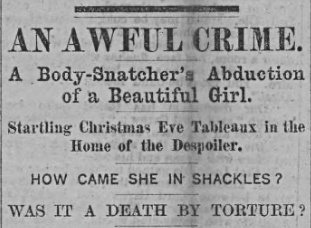
Earlier that day, seeking shelter, he had stumbled upon an abandoned house on Court Street.
The house was known to the locals. It was the former abode of a man who had died just the day before. A man named John Catlin Wells.
Wells was sixty years old. To the neighborhood children, he was “Daddy” Wells—a nickname that implied warmth and kindness.
But the police knew better. For thirty years, “Daddy” Wells had been a body snatcher. But unlike others who did it for profit… Wells did it for “science.” He was obsessed with anatomy, a man described as “somewhat crazy” on the subject of human experimentation.
Unaware of this history, the vagrant had broken into the empty house and gone down to the cellar. He built a small fire to warm his freezing hands.
He sat there, in the meditative silence of the firelight… until he heard a sound.
The vagrant looked up. In the corner of the cellar, concealed partially by a woman’s dress, the rats were feasting.
They weren’t eating garbage. They were gnawing on a blood-crimsoned skeleton… one where the flesh still clung to the bones.
The Coroner was skeptical. He thought the story was moonshine—a hallucination of a desperate man. But duty is duty.
He empaneled a jury of six men right there in the station house. Together, with the terrified vagrant as their guide, they marched through the snow to the house on Court Street.
The house was a single-story ruin, smoke-begrimed and worn by time. The garden, which “Daddy” Wells had once delighted to cultivate, now lay barren under the snow.
Two officers were already guarding the door. They looked pale. They had seen what was inside.
The party entered. They passed through the bedroom and sitting room—ordinary, dusty, silent. Then, they reached the kitchen.
The guide lifted the cellar door.
Instantly, a stench rose from the foul depths—a smell so nauseating it nearly turned the stomachs of the police. Some of the jurymen refused to go further. They wanted to turn back.
But the Coroner pressed on. One by one… down the rickety stairs… into the dark.
The cellar was cluttered with worn-out domestic items. It looked like a storage room for junk. Except for one corner.
There, the Coroner’s janitor—a cold-blooded man used to such sights—approached the figure.
It was a body. But it wasn’t lying down.
It was standing up.
The janitor discovered a complex system of restraints. Iron clasps were fastened about the arms and legs, bolting the body to the stone wall. An iron collar enclosed the neck, held tight by a chain extending from the ceiling.
They were locked with spring locks. The keys were missing.
The body was a prisoner even in death.
The Coroner made a grim examination. The rats had done terrible work from the waist down. But the upper body, though decomposing, was intact enough to tell a story.
It was a woman. And she wasn’t an unknown pauper from the Potter’s Field.
One glance at the shrunken face satisfied the officers. This was Florence Estill.
Florence Estill was a young woman of remarkable beauty, a celebrity in her hometown of Glendale. She had suitors by the score.
Just one week prior, she had left her home at 9:00 PM to visit a neighbor. She walked into the dark… and vanished.
When the news broke the next morning, Cincinnati erupted in fury. This wasn’t just grave robbing. This was something darker.
How did a woman, missing for only a week, end up chained in the cellar of a dead body snatcher?
Back in the cellar, the Coroner had to leave the body where it was until a locksmith could be found. He left a timid officer to guard the remains from the rats. The officer was so terrified that the cold-blooded janitor agreed to sit with him through the night.
The investigation hit a dead end. The only suspect, “Daddy” Wells, was already dead. In a twist of poetic justice, his body had already been shipped to a medical college for dissection.
He left no diary. No notes. No explanation for why Florence Estill was in his cellar.
Was she murdered? Was she snatched from a fresh grave? Or was “Daddy” Wells, in his madness, conducting an experiment on the human form that required a “fresh” subject?
The theories ran wild. Some said he kept her simply to experiment upon her. But the truth died with the body snatcher, leaving only a blood-crimsoned skeleton and a city in mourning.
Percy Brown & The Washington D.C. Ring
By 1894, the golden age of body snatching was fading. The laws were changing, and the “Resurrection Men” were dying out.
In the Nation’s Capital, on a crisp October day, the most notorious of them all lay dying.
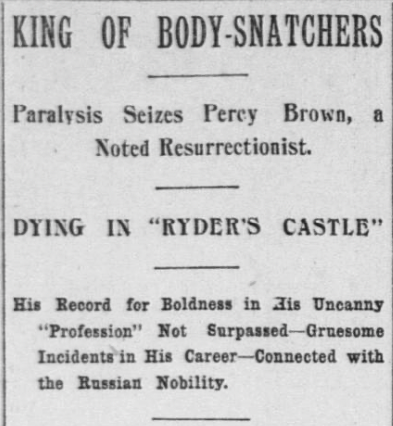
He lived in a place the locals sarcastically called “Ryder’s Castle.” It wasn’t a palace; it was a crumbling tenement at 429 New Jersey Avenue, a “tumbledown rookery” filled with the city’s poorest residents.
Inside a dim room, stricken with paralysis, lay a man named Percy Brown.
He was 65 years old, penniless, and destitute. But look closer at the face. The long, reddish beard. The heavy, flowing eyebrows. The eyes that witnesses described as “bead-like” and piercing.
This was the man who proudly wore the title: “King of the Body Snatchers.”
Percy Brown was a man of contradictions. Born in Russia, he claimed to be connected to the nobility of the Czar’s domains. Whether that was true or a con man’s lie, we’ll never know.
What we do know is that for decades, he, his sister Maud Brown, and their confederates ran the most successful body-snatching ring in Washington.
Percy Brown wasn’t just a thief; he was a boogeyman. In the neighborhoods of D.C., people whispered that he was a “Slap Doctor.”
This was a terrifying slang term used by the local population. They believed that men like Percy didn’t just wait for you to die… they helped you along.
The rumor was that they would “slap” a plaster over a living victim’s mouth to suffocate them—capturing live subjects for the dissecting table. While there’s no proof Percy murdered his subjects, his “sin-hardened” reputation made the public ready to believe anything.
His headquarters matched his reputation. For years, he operated out of an old shanty near the brick yards. It was an admirable location for his trade: gloomy, isolated, with few neighbors to complain about the smell or the wagons arriving at 3:00 AM.
The “King’s” reign wasn’t without trouble. His most famous arrest happened years earlier, in 1873, at the Baltimore and Ohio Depot.
Body snatching was a business, and like any business, it involved shipping and logistics. Percy had an order to fill: four bodies for a medical college in Baltimore. Price tag? Fifteen dollars a head.
He packed all four “stiffs” into a single, long wooden crate. Officers Atchison and Dubois were patrolling the depot, perhaps suspicious of the heavy, odd-smelling box.
And then… disaster struck.
Whether it was handled roughly or just poorly built, the box broke open right on the depot platform.
The corpses rolled out, right in front of the commuters. Panic ensued. Rumors flew instantly that these were four murdered men.
A crowd of several thousand people congregated around the 7th Precinct station house, clamoring to see the “victims.” The police were forced to lay the cadavers out in a ghastly line in the backyard for identification.
And here lies the incredible legal twist. In 1873, there was no specific law in Washington D.C. that punished body snatching. A dead body was not considered “property” under common law, so you couldn’t be charged with stealing it.
The police had to charge Percy, his sister Maud, and their assistant… with vagrancy.
It was the first case of its kind in a District court. Judge Snell presided. On the evidence table lay the tools of Percy’s trade, captured by the police: grave hooks, heavy canvas bags, crowbars, and spades.
They were convicted and sent to jail for three months. A slap on the wrist.
Years later, Percy was back in court. He had moved his operation to a house in Northeast Washington, where police found a “damp cavern” beneath the floorboards used for cold storage.
During this trial, the Judge asked Percy a direct question: “Do you rob graves as a means of livelihood?”
Percy didn’t flinch. He didn’t apologize. He answered proudly:
“Yes. And I would rob the grave of George Washington if I could get the chance.”
Percy had one weakness: the bottle. His fondness for drink often kept his cash account low and his judgment cloudy.
One night, Percy was tasked with delivering a fresh cadaver to the dissecting rooms at the corner of 10th and E Streets NW.
The medical college was on the top floor. But in his drunken stupor, Percy made a critical error. instead of placing the body in the hallway leading to the college… he opened the door to the adjoining private residence.
He propped the corpse up in the vestibule, closed the door, and staggered off into the night, satisfied with a job well done.
A short while later, Officer Slattery was walking his beat. He checked the door of the residence to ensure it was locked.
The door swung open. The corpse, having lost its balance, pitched forward out of the darkness and fell right at the policeman’s feet.
Once again, reports of a horrible murder swept the city, until they realized it was just another delivery by the King of the Snatchers.
Percy Brown eventually died, leaving behind a legacy of terror and dark comedy. He was a criminal, yes. But he was also a symptom of a medical system that was desperate for knowledge but unwilling to provide a legal way to obtain it.
Men like Percy Brown filled that void. And they filled it with a shovel.
The Harrison Horror
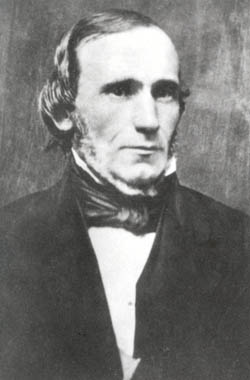
His name was John Scott Harrison. He was the son of a U.S. President, William Henry Harrison. And he was the father of a future U.S. President, Benjamin Harrison.
John Scott Harrison was a distinguished man—a former Congressman and a pillar of Ohio society. When he died in May of 1878, at the age of 73, his family was grief-stricken.
But they were also… afraid.
By 1878, the fear of “resurrection men” in Ohio was at a fever pitch. The Harrisons knew that a fresh grave, especially one of a prominent man, was a target.
So, they took extreme precautions. At the burial in North Bend, Ohio, the family had the grave dug extra deep. They placed three immense stone slabs—impossibly heavy—over the coffin. They poured cement into the soil to seal it like a vault.
And finally, they hired a watchman to guard the grave night and day for a week. They believed they had made the grave impregnable.
But the Harrisons were already on edge. Just days before John Scott Harrison died, a young family friend named Augustus Devin had passed away. He was buried in the same cemetery.
On the day of John Scott Harrison’s funeral, the family noticed something disturbing at the Devin grave.
The earth was disturbed. The grass was trampled. Upon investigation, their worst fears were confirmed: Augustus Devin’s body was gone. stolen.
Benjamin Harrison—the future President—was furious. While half the family stayed behind to guard his father’s fresh grave, Benjamin and a search party set out for Cincinnati to find young Augustus.
They went straight to the heart of the trade. They had search warrants for the medical colleges of Cincinnati.
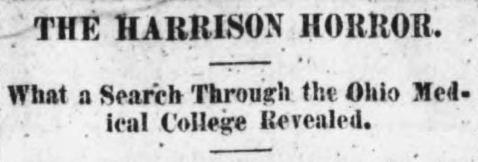
Their first stop was a familiar location: The Ohio Medical College on 6th Street. The very same institution that had bought bodies from “Old Cunny” and dissected “Daddy” Wells.
The search party, led by John Harrison Jr. (John Scott’s son), arrived with detectives. The faculty denied everything. They insisted no bodies had been received recently.
But the janitor… a man named Marshall… was acting strange.
Marshall tried to block them. He claimed there was nothing to see. But the detectives pushed past him. They searched the dissecting rooms. Nothing.
They searched the cellar. Nothing.
Then, they noticed a windlass—a hand-cranked rope hoist—tucked away in a dark chute.
The rope was taut. It was holding weight.
Thinking they had found Augustus Devin, the detectives began to turn the crank. Slowly, the rope pulled a burden up from the dark sub-basement.
A body emerged into the light. It was an elderly man. His head was covered with a cloth. A rope was tied roughly around his neck.
John Harrison Jr. was confused. This wasn’t Augustus Devin. Devin was a young man. This corpse was old, gray-haired.
Still, he needed to identify the victim. He reached out and lifted the cloth.
The blood drained from John Harrison’s face. He staggered back. The detectives caught him before he fell.
It wasn’t Augustus Devin.
It was his father.
It was John Scott Harrison.
Less than 24 hours after being buried under tons of rock and cement, guarded by a paid watchman, the son of a President was hanging by his neck in a medical college chute.
How was it possible? The investigation revealed a level of skill that only professional resurrectionists possessed.
They hadn’t tried to lift the stone slabs. That would have been impossible. Instead, they dug a narrow shaft at the head of the grave, burrowing diagonally under the stones.
They drilled holes into the coffin’s headboard, smashed it in, hooked the body, and dragged it out through the narrow tunnel.
And the watchman? He had conveniently “checked the other side of the cemetery” while the crime took place. It was an inside job.
The news exploded across the country. This wasn’t a nameless vagrant. This was American royalty.
Benjamin Harrison, who would become President just a decade later, wrote an open letter to the citizens of Cincinnati. He called the body snatchers and the doctors who employed them “ghouls” and “receivers of stolen goods.”
And what about Augustus Devin? The search continued. Months later, his body was found… packed in a barrel of brine at a medical college in Michigan.
Both bodies were eventually reburied.
The Harrison Horror was the breaking point. The public realized that if a President’s son wasn’t safe, nobody was.
It forced the passage of the Anatomy Act of 1881 in Ohio and similar laws across the country. These laws allowed unclaimed bodies from prisons and poorhouses to be used for science legally… finally putting the resurrection men out of business.
Rufus Cantrell & The Indianapolis Ring
By the turn of the 20th century, the United States was modernizing. We had electricity, telephones, and the dawn of the automobile. The chaotic days of “Old Cunny” and “Daddy Wells” should have been ancient history.
But in Indianapolis, the trade hadn’t disappeared. It had evolved. It had incorporated.
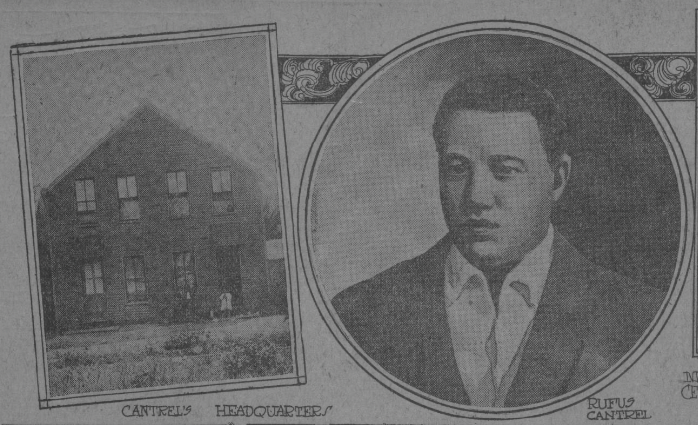
Enter Rufus William Cantrell. Known to the police by his initials, R.W.C., and to the public by a more sinister title: “The King of the Ghouls.”
Cantrell wasn’t a desperate loner. He was the CEO of a resurrectionist gang that operated with the efficiency of a corporation.
According to reports from the New York Herald in August 1903, Cantrell’s ring didn’t just supply local schools. They were a national wholesaler. For five years, they shipped bodies from Indiana to medical colleges all the way from New York City to San Francisco.
And he didn’t work alone. This was a conspiracy that went to the top. His confession implicated Dr. Joseph C. Alexander, who allegedly monitored death returns at the Board of Health to spot fresh “product.”

It included the owner of Mount Jackson Cemetery, Harry Speers. It included watchmen. It included undertakers.
The fox wasn’t just in the henhouse; the fox owned the henhouse.
Cantrell operated with a terrifying boldness. He was known to stop at saloons on his way home from a “job,” inviting casual barroom acquaintances to step outside and look into his wagon to see what he was taking home.
But his callousness went deeper than bragging. The old adage of “honor among thieves” did not apply to the Indianapolis ring.
When a member of his own gang, Samuel Wood, fractured his skull fleeing a cemetery, he was taken to a hospital. When Wood died from his injuries, the gang didn’t pay for his funeral.
They stole his body and sold it to the dissecting table.
Cantrell even confessed to disposing of the body of a young woman he had once proclaimed to be his sweetheart. His defense? He claimed he “didn’t identify the body” until he had already pulled it from the earth.
But the most chilling story involved the wife of another gang member, Mrs. Isom Donnell.
When Mrs. Donnell died, the gang didn’t wait for her to be buried. They intercepted the coffin before the funeral services.
They removed her body. To ensure the pallbearers wouldn’t notice the difference in weight, they filled the casket with blocks of ice weighing exactly as much as she did.
Her family wept over a box of ice, while her body was already being prepped for shipment.
However, robbery was hard work. The ground was often frozen, the digging was backbreaking, and farmers were starting to guard their graves with shotguns.
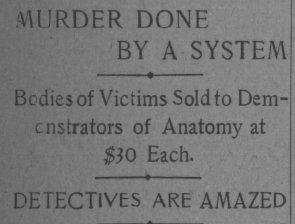
Cantrell told police that his men began to object to the labor required for a $30 payout. They wanted an easier way.
And so, they crossed the line that separates a thief from a monster. They stopped waiting for people to die.
Cantrell confessed that he was the controlling spirit of a “Murder Syndicate.”
They targeted the vulnerable. The forgotten.
A crippled mendicant with small hoardings. A migratory butler with meager savings. A foolish youth flashing greenbacks in a tavern.
The motive was twofold: First, rob them of their money. Second, sell their bodies for recognized commercial value.
Cantrell admitted to participating in or knowing of at least six murders. And here lies the darkest indictment of the era:
They sold these murdered victims to medical colleges. The anatomists, experts in the human body, should have been able to see the signs of violence—the bruising, the strangulation marks. But money changed hands, and no questions were asked.
The law finally caught up with Rufus Cantrell. Initially arrested on a trivial fraud charge, the evidence of his true profession began to pile up.
Realizing the game was up, “The King” turned state’s evidence. He confessed everything. He named names.
The scandal rocked Indianapolis. It wasn’t just the ghouls on trial. It was the system. Dr. Alexander, Dr. Wilson, the cemetery custodian George Haymaker—they were all arrested.
But unlike Cantrell, these men had power. The New York Herald reported that “the entire medical profession of the city and state is rallying to the defense of the doctors.”
Rufus Cantrell was sentenced to an indeterminate term of 3 to 10 years in the Indiana State Reformatory. He claimed his conscience wouldn’t let him remain silent, but in the end, his confession destroyed the Indianapolis ring forever.
The Cantrell trials of 1903 marked the end of an era. The sheer brutality of the “Murder Syndicate,” combined with the high-profile scandals like the Harrison Horror, finally forced the hand of legislation.
States tightened their Anatomy Acts. Safe, legal donation programs were established. The “Resurrection Man” was no longer a necessary evil; he was just a relic of a barbaric past.
They were ghouls. They were thieves. Some were murderers.
But they were also the silent architects of American medicine. Every time a surgeon saves a life today, they are using knowledge that was literally dug up from the dirt by men like Rufus Cantrell.
SOURCES
New York Dispatch. New York, N.Y. February 8, 1874.
New York Dispatch. New York, N.Y. December 6, 1874.
The Washington Times. Washington, D.C. October 23, 1894
The St. Louis Republic. St. Louis, Mo. August 10, 1903.
The New York Herald. New York, N.Y. August 16, 1903.
Evening Times-Republican. Marshalltown, Iowa. February 6, 1903.