Somewhere in America, right now, there are buried fortunes, hidden vaults, lost artifacts, and sealed rooms no one alive has ever seen.
And the maps to them aren’t in museums.
They’re sitting, unread, inside newspaper archives.
I’m going to show you exactly how I find real treasure leads and how you can start today.
BEGIN YOUR TREASURE HUNT
Most people think treasure hunting starts in the field.
- With metal detectors.
- Shovels.
- Flashlights.
- Expensive gear.
- A truck full of tools and a crew following you around.
That’s the version we’ve been sold.
But that’s not where real treasure hunting begins.
- It begins at a desk.
- With paper.
- With ink.
- With names.
- With places.
With stories that were never finished.
Because long before treasure hunters had TV shows, they had newspapers.
And newspapers recorded everything.
- Buried money that was never recovered.
- Shipments that vanished.
- Hidden rooms found during renovations.
- Strange artifacts pulled from the ground.
- Lost mines people searched for their entire lives.
- Expeditions that went out, and never came back.
These weren’t legends. They were local news.
Not myths. But reports, tips, confessions, rumors, court cases, desperate searches, and sometimes, last sightings.
Most of them didn’t end with answers.
- They ended with silence.
- The story moved on.
- The newspaper got wrapped around dishes.
- The town forgot.
- The trail went cold.
And that’s where modern treasure hunting actually lives.
Not in exotic locations.

But in abandoned questions.
Because every unsolved newspaper article is a loose thread.
The real treasure maps weren’t drawn on parchment.
They were printed in columns.
And almost nobody is reading them anymore.
Which means right now, you have access to the same raw leads that treasure hunters, explorers, reporters, and fortune seekers were chasing a hundred years ago.
Only now, they’re searchable.
And once you learn how to look for them…
You stop consuming treasure stories.
And you start uncovering them.
INTRODUCING THE TOOL
And this is where all of those abandoned questions are waiting.
- Not behind a paywall.
- Not in a private collection.
- And not locked in a university basement.
But inside a free public archive run by the United States Library of Congress.
It’s called Chronicling America.
And it holds millions of digitized newspaper pages, from small-town papers, frontier towns, industrial cities, and forgotten communities, stretching across more than a hundred years of American life.
This is where fires were first reported.
Where strange discoveries were announced.
Where lost shipments were last seen.
Where treasure hunters advertised their searches.
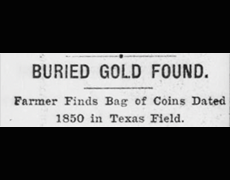
Where rumors were printed as fact, and the facts were sometimes stranger than fiction.
It’s where yesterday’s breaking news now lives as raw historical evidence.
And what makes this place so powerful isn’t just the number of pages. It’s the way they’re indexed.
You are not flipping reels of microfilm. You are searching language.
Which means you can hunt the way people spoke, described discoveries, and framed mysteries.
Every strange headline.
Every forgotten column.
Every half-finished story…
is now sitting behind a single search bar.
This archive doesn’t tell you what treasure exists.
It hands you the same chaos reporters were working with in the 1800s.
You will find:
- Scattered reports.
- Contradictory claims.
- Local legends in print.
- And endless leads that were never followed.
And that’s exactly what you want.
Because treasure hunters don’t start with answers.
They start with fragments.
- Names.
- Dates.
- Places.
- And a sentence that refuses to leave your head.
Next, I’m going to show you how to start teasing those fragments out of the noise by using a few simple keyword strategies.
THE KEYWORD METHOD
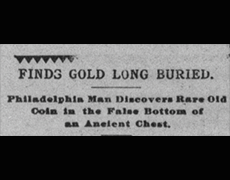
If you walk into an archive like this without a method, you don’t find treasure.
You drown in paper. Millions of pages.
There are:
- Wars.
- Births.
- Weather.
- Politics.
- Advertisements.
- Obituaries.
So the real skill isn’t reading. It’s filtering.
Treasure hunting in newspaper archives starts with understanding one thing: You’re not searching for treasure.
You’re searching for the language people used when they thought they were near it.
Because reporters in the 1800s didn’t write, “Possible legendary treasure lead.”
They wrote things like…
- “Lost treasure.”
- “Buried money.”
- “Hidden gold.”
- “Lost artifacts.”
- “Strange discovery.”
These phrases act like traps.
They pull forward the exact moments when someone believed something valuable had been hidden, found, or lost.
If you’re brand new to researching old records, start simple.
These are the three I recommend to anyone starting out:
- “Lost treasure.”
- “Treasure hunter.”
- “Lost artifacts.”
“Lost treasure” shows you where people believed something valuable was missing.
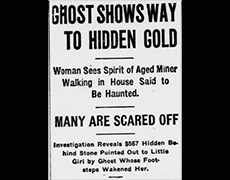
“Treasure hunter” shows you what others were actively searching for — and often, what they failed to find.
And “lost artifacts” pulls you into museums, private collections, graves, ruins, and forgotten discoveries.
Remember, you are not reading history. You’re scanning leads.
You can’t think like a modern person. Instead, you have to think like a 19th-century reporter.
And that means using old language and different ways of describing things.
So instead of only searching “treasure”…
You can search for:
- “Buried.”
- “Hidden.”
- “Secreted.”
- “Unearthed.”
- “Discovered.”
- “Vault.”
- “Sealed room.”
- “Lost mine.”
- “Forgotten tunnel.”
Now you’re not chasing treasure. You’re chasing incidents. Moments where something unusual entered the record.
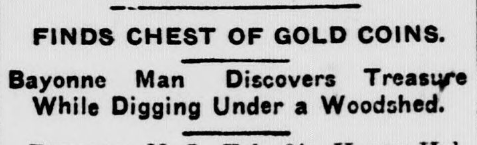
When you open one of these articles, don’t read it like a story.
Read it like a map.
You’re hunting for four things:
- Names.
- Places.
- Dates.
- And unresolved outcomes.
- Who was involved?
- Where did this happen?
- When was it reported?
- And what didn’t get answered?
Because treasure lives in what’s missing.
- A box that was never found.
- A tunnel no one explored.
- A man who vanished.
- A location that was mentioned once, and never again.
Every one of those is a potential real-world investigation.
Here’s the rule that turns this from research into treasure hunting:
If an article feels finished… skip it.
If it feels abandoned… save it.
The moment you feel frustrated…
The moment you say, “What ever happened to that?”
That’s your lead. That’s what you collect.
Not facts.
But questions.
So now, instead of millions of pages, you have a sieve.
TURNING ARTICLES INTO REAL-WORLD ADVENTURES
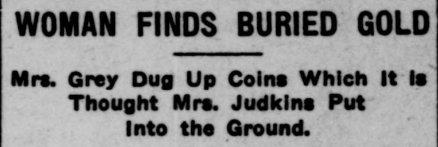
At this point, most people stop.
They screenshot the article. They save the link.
They think, “That’s interesting.” And then they close the tab.
Treasure hunters don’t.
Because a newspaper article is never the destination. It’s the doorway.
What you’re holding isn’t a story. It’s the promise of an adventure.
And the moment you treat it that way, everything changes.
- So, open a document.
- A notebook.
- A corkboard.
- A folder.
This becomes your personal treasure registry.
- Every strange article gets its own page.
- Drop in the clipping.
- Write the location in bold.
- List the names.
- Copy the phrases that stand out.
Then you start expanding outward.
Most real leads don’t come from one article.
They come from multiple sources.
You see, newspapers are only the first layer.
Once you have a location, you move outward into physical history.
- Old maps.
- Property records.
- Cemetery databases.
- Local history books.
- Historical society archives.
- Museum catalogs.
This is where rumors either collapse, or harden.
You start to see patterns.
The newspaper article gave you the spark.
This builds the terrain.
Eventually, something happens.
Your lead stops being just text.
It becomes a place.
It could be:
- An empty lot.
- A cemetery.
- A ruined foundation.
- A forgotten road.
- A patch of woods no one bothers to enter.
This is the shift. When your treasure hunt leaves the archives, and enters the world.
Most people go their entire lives believing adventure is something that happens to other people.
On television.
And in books.
They’re taught that discovery belongs to experts.
That mysteries are already solved.
That everything worth finding has already been found.
But that only feels true because most people never check out the places where unfinished things are kept.
Old newspapers are not dead history. They are active maps.
They are filled with moments where someone stood at the edge of something, and didn’t cross it.
Not because they were fake. But because attention moved on.
Listen:
- You don’t need to wait to take a trip.
- You don’t need to wait for money.
- You don’t need to wait for permission.
Your first adventure is already sitting in the newspaper archive.
It will probably be something small.
That refuses to leave your mind.
So start there.
- Open the archive.
- Type a strange phrase.
- Follow it.
Build your own list of unfinished things.
And see where they lead.
Because the real difference between someone who watches treasure hunts and someone who lives them isn’t courage or a large bank account.
It’s that one of them decided to open the papers, and keep going.