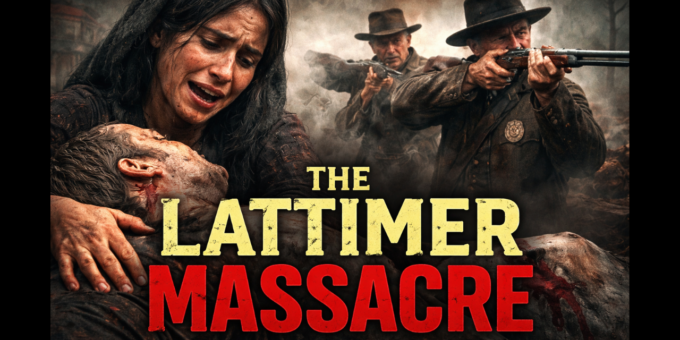
On Friday, September 10th, 1897, they marched unarmed.
Nearly 400 immigrant coal miners – Slovak, Polish, Lithuanian – walking down a dusty road outside Hazleton, Pennsylvania.
They carried no weapons. Only an American flag.
They were striking for higher wages and for the right to organize.
For the right to be treated as men instead of expendable labor.
Waiting for them at the edge of Lattimer were Sheriff James Martin and a posse of deputies. Many of these men were local businessmen.
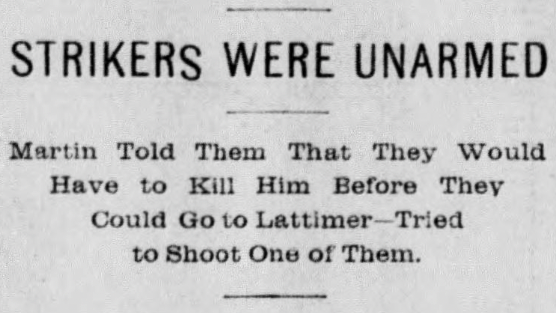
The sheriff ordered the miners to disperse, but the miners kept walking.
The sheriff claimed someone brushed his arm.
And then…
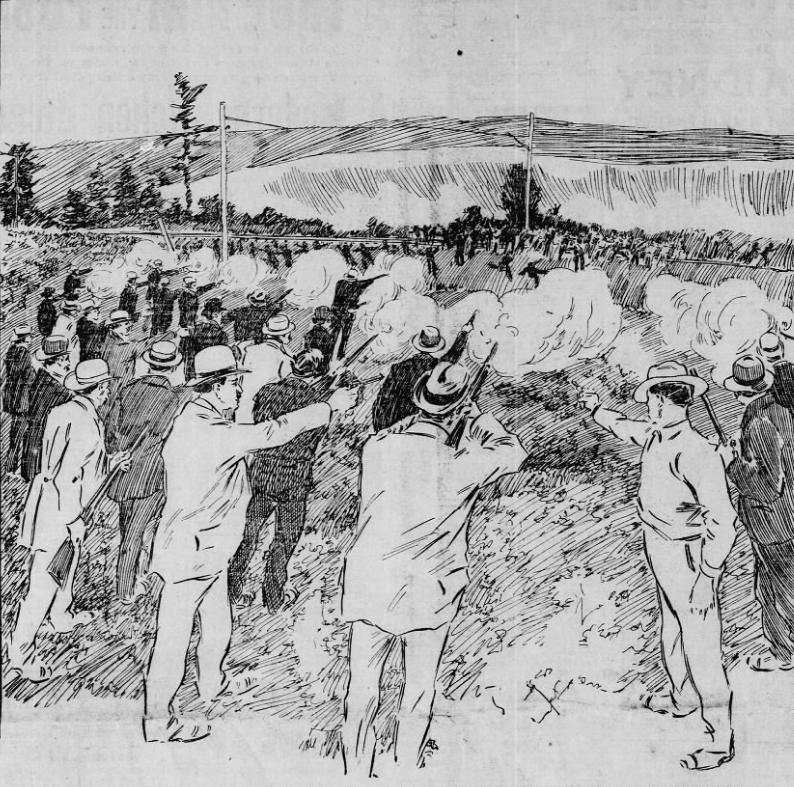
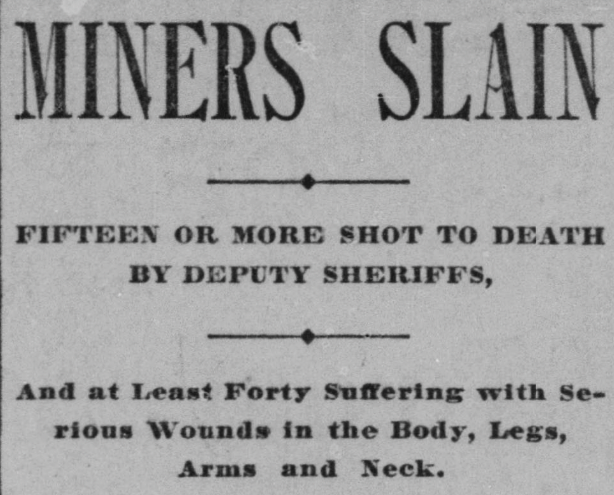
The deputies opened fire. They shot into the crowd at point-blank range. The miners fell in rows.
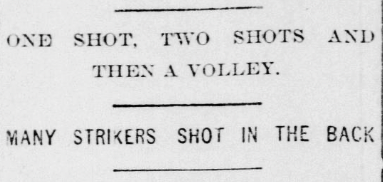
Many were shot in the back and nineteen miners died. Dozens more were wounded.
And not a single deputy was convicted.
This was not a riot. It was a massacre.
And it happened in the coal fields of Pennsylvania.
CONDITIONS IN THE COAL REGION
By the 1890s, the anthracite coal region of northeastern Pennsylvania powered America.
Anthracite – hard coal – burned hotter and cleaner than soft bituminous coal. It heated homes in New York. It fueled factories. It ran railroads.
It made fortunes. But not for the men who mined it.
The coal fields were carved into company towns – patchwork settlements owned, controlled, and watched by the very corporations that employed the miners.
The company owned the houses. And the company owned the stores.
The company often paid workers in scrip – a private currency that could only be spent at company shops.
Wages were low and unpredictable. Miners were not paid by the hour. They were paid by the ton.
But here was the catch: the company controlled the scale.
A miner could dig twelve hours underground and still be told his load was “light.” Deductions were routine. Complaints were dangerous.
And the work itself was brutal.
Anthracite seams were narrow. Men and boys worked crouched in low passages, blasting rock with black powder, breathing in coal dust that scarred their lungs.
Cave-ins were common. Explosions were frequent. Death was expected. In some towns, funerals were weekly events.
But perhaps most volatile of all was who the miners were.
The coal companies deliberately recruited immigrants from Eastern and Southern Europe – Slovaks, Poles, Lithuanians, Hungarians – men who spoke little English and were desperate for work.
They were paid less than earlier Irish and Welsh miners. And the companies relied on those ethnic divisions to keep workers divided.
Old immigrants against new immigrants. English speakers against non-English speakers. Catholics against Protestants.
Divide and extract.
By 1897, wages had already been cut repeatedly during economic downturns. The Panic of 1893 had devastated the industry, and companies responded the only way they knew how:
- Lower pay.
- Longer hours.
- More control.
For many miners, take-home pay had dropped to barely a dollar a day.
And yet, rents in company housing did not fall. Store prices did not fall. The companies still profited. The men underground bore the loss.
By the summer of 1897, frustration had been building for years.
It only needed a spark.
THE STRIKE BEGINS
In the late summer of 1897, the tension broke in Hazleton.
The Lehigh and Wilkes-Barre Coal Company announced another wage cut. For many miners, it was the final insult.
Some were already earning less than a dollar a day after deductions. Some had families living in cramped company housing. Most were buried in debt to the company store.
This time, they refused.
What began as a small walkout spread quickly. Word traveled through patch towns and boarding houses in dozens of languages.
Men who had rarely spoken to one another now shared the same grievance.
And something else began to change.
The United Mine Workers of America, still young and struggling for influence, saw an opportunity. For years, many unions had ignored the so-called “new immigrants,” believing them too divided, too poor, and too easily manipulated.
But in 1897, organizers stepped in.
- They translated speeches.
- They printed multilingual leaflets.
- They explained what collective bargaining meant.
And slowly, the strike grew. Within days, thousands of miners across the region walked off the job.
They demanded:
- Restoration of previous wage levels
- Standardized pay for equal work
- An end to arbitrary deductions
- Recognition of their right to organize
For coal operators, this was not just a labor dispute. It was a threat to their control.
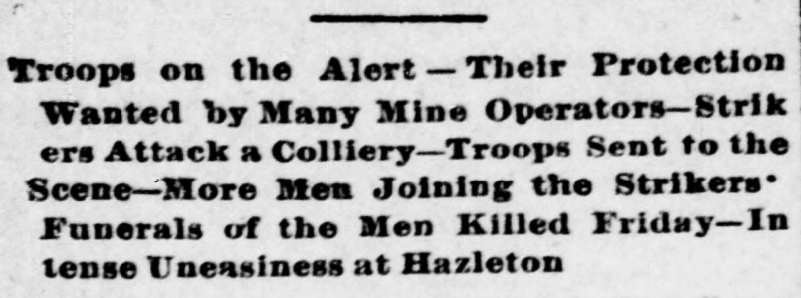
Sheriff James Martin of Luzerne County was called upon to restore order. But “order” in the coal fields did not mean fairness.
Martin began deputizing men by the dozens – local businessmen, clerks, supervisors – arming them with rifles and authority.
The message was clear: The strike would not be tolerated.
Meanwhile, the miners made a decision.
Instead of rioting… Instead of attacking property… They would march.
On September 10th, a group of unarmed miners gathered with a simple plan:
They would walk from Harwood to Lattimer. They would persuade non-striking workers to join them. They would carry the American flag. They would show that they were not anarchists. They were workers.
And they believed they had the right to be heard.
THE MARCH TO LATTIMER
Friday, September 10th, 1897.
The morning air in the coal fields was cool, but the mood was steady.
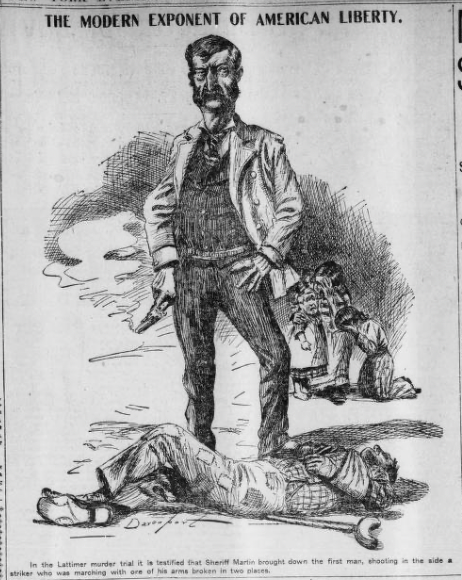
Nearly 300 to 400 striking miners gathered in Harwood.
Many wore their work clothes. Some still had coal dust embedded in the seams of their hands.
They were unarmed.
At the front of the procession, one man carried an American flag. This was deliberate. The miners had been called radicals. Foreign agitators. Anarchists. So they marched under the flag.
They walked along the dusty road toward Lattimer, a small mining village where several dozen men were still working.
Their goal was not violence. It was persuasion. They planned to ask the remaining workers to join the strike.
As they walked, more men joined. The line stretched along the road. Witnesses later described them as orderly. Quiet. Determined. Some sang hymns. Others marched in silence.
Meanwhile, word traveled ahead of them.
Sheriff James Martin had already been confronting strikers throughout the region. He saw the march not as peaceful protest, but as insurrection.
By midday, Martin had assembled a posse of roughly 150 deputies. Many were not trained lawmen. They were local businessmen. Shopkeepers. Clerks. Men loyal to the coal operators.
They carried rifles. And they were waiting at the outskirts of Lattimer.
When the miners approached, the sheriff stepped forward.
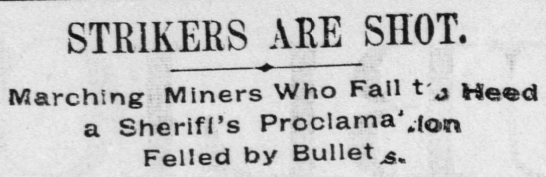
Accounts differ on exactly what was said. But Martin ordered the marchers to disperse.
The miners continued walking.
Some witnesses said they did not understand the order. Many spoke little English.
Others believed they were within their rights to march peacefully.
The sheriff moved toward the man carrying the flag. He attempted to seize it. There was pushing. Confusion. Voices rising in different languages.
Then… a shot rang out.
To this day, it is unclear who fired first. (Many claimed it was the Sheriff.)
What is clear is what followed.
The deputies opened fire into the crowd. They fired at close range. They fired as the miners turned and ran.
Later examinations showed many victims had been shot in the back.
The road became chaos. Men fell into the dirt.
Some tried to shield others. Some crawled into nearby fields.
Within minutes, the shooting stopped. Nineteen miners lay dead. Dozens more were wounded. The American flag fell to the ground.
AFTERMATH
When the gunfire stopped, the road to Lattimer was silent. Smoke hung in the air.
Men lay scattered across the dirt. Some face down, some curled on their sides, some still gripping each other. Many had been shot in the back.
The wounded were carried away in wagons and on makeshift stretchers. There were no ambulances waiting. No coordinated aid.
In the patch towns, news spread quickly. Wives ran toward the road. Boarding houses filled with sobbing. Priests were summoned.
For immigrant communities already treated as disposable labor, the message felt unmistakable: Their lives were worth less than the coal they dug.
But something else happened.
The massacre did not break the strike. It strengthened it.
Public outrage rippled beyond the coal fields. Newspapers across Pennsylvania and New York carried the story.
Eyewitness accounts described deputies firing into a retreating crowd. Autopsies confirmed bullets in backs.
The image of unarmed men shot while carrying the American flag cut through ethnic prejudice in a way few labor disputes had before.
The funerals became processions. Thousands attended. Black clothing filled the streets. Flags draped coffins. Hymns echoed through mining towns that had grown used to burying their own, but never like this.
The strike swelled. Miners who had hesitated now walked off the job. Support for the United Mine Workers grew.
What had begun as a local wage dispute became something larger. A reckoning.
But justice in the courts would prove harder to win.
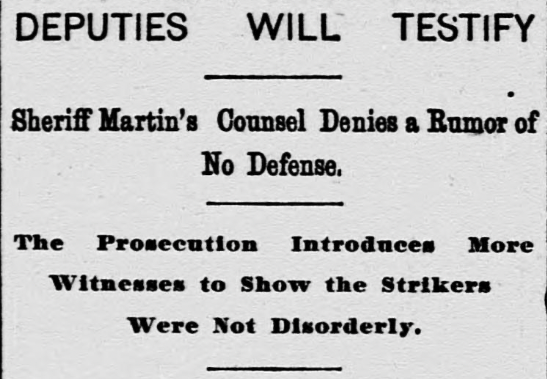
Sheriff James Martin and seventy-three deputies were indicted for murder. The trial drew national attention. Witnesses testified that the miners had been unarmed. That they had been shot while fleeing. That the deputies fired in volleys.
And yet…
In February 1898, after weeks of testimony, the jury returned its verdict.
Not guilty. All of them. The deputies walked free.