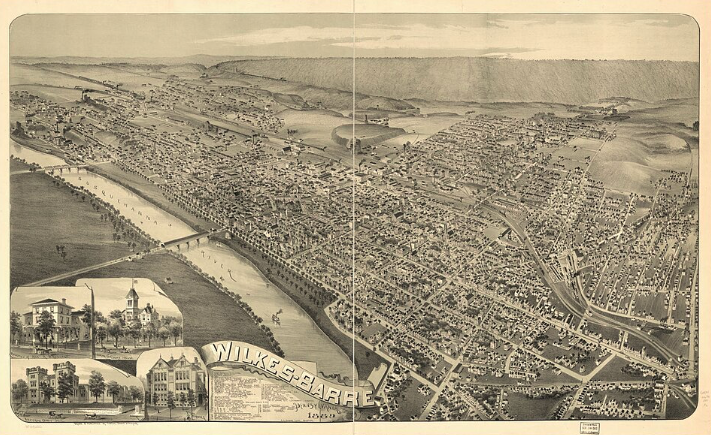
In the bitter cold of a January morning in 1883, the people of Wilkes-Barre’s Five Points neighborhood were jolted awake by a sound like an earthquake.
The first tremendous report sent families rushing from their homes half dressed and terrified. Then came a second shock, just as loud and alarming.
Mothers carried babies into the freezing darkness, children screamed, and miners tried in vain to calm their frightened wives and families. No one knew whether the ground beneath them was about to open.
When men with miners’ lamps began searching the streets, they found the cause for alarm. Cracks had appeared in the earth, running across Scott Street and beneath the foundations of nearby houses. By daylight, crowds from across town had gathered to see the damage for themselves.
What they found was unsettling. Cellar walls had cracked. Ceilings had fallen. Sidewalks were twisted and broken. Houses on Kidder Street had shifted, bulged, and split, some so badly damaged that they appeared ready to collapse. A brick schoolhouse stood surrounded by threatening gaps in the ground.
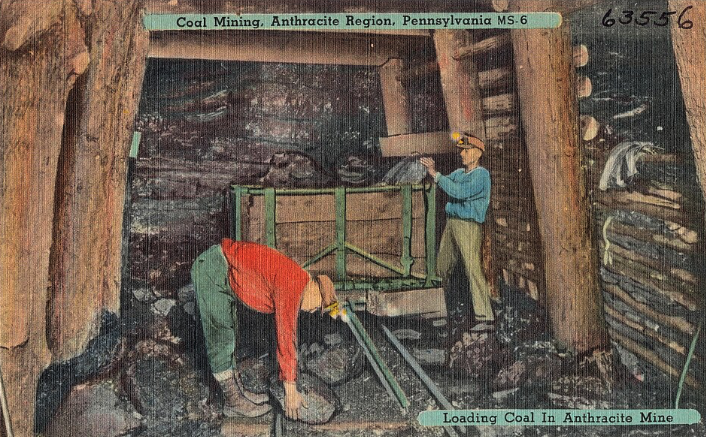
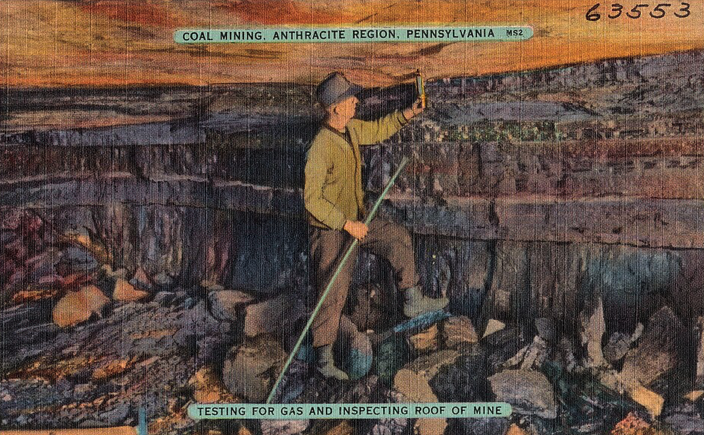
The disaster was believed to have been caused by the failure of old mine supports beneath the neighborhood. As rotted props gave way underground, the land above began to sink.
By evening, the shocks had stopped, but fear remained. Many residents refused to sleep in their homes, convinced that another collapse could come at any moment.
A Terrible Scare
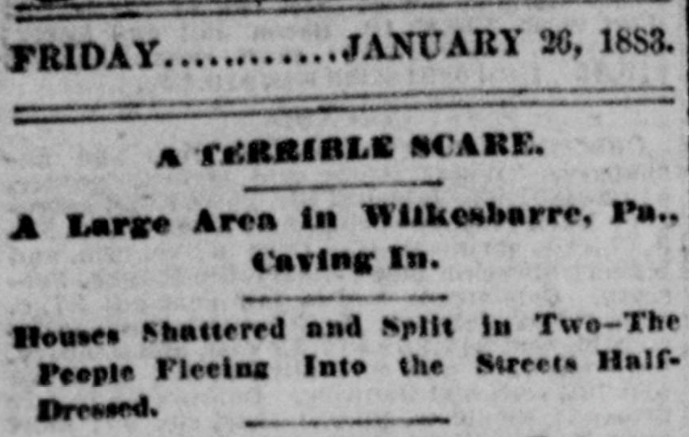
WILKES-BARRE, Pennsylvania. — At an early hour Wednesday morning the people residing in the northeastern part of this city, familiarly known as the “Five Points,” were thrown into a state of great excitement by a loud report, resembling the shock of an earthquake. In a few minutes the surrounding streets were crowded with men, women, and children, half dressed and stricken with fright.
The weather was terribly cold and many persons suffered greatly. Hardly had the first shock passed before another, just as loud and alarming, followed. This increased the excitement, and many of those who still remained in their houses made quick haste to desert them.
Scenes of Wild Excitement
Mothers caught up their babies, and with wild cries rushed out into the cold, dark atmosphere, not knowing if the next minute they would be swallowed up. Children joined with their frightened screams, and for a time the greatest consternation prevailed.
The fathers of families, mostly miners, tried to pacify the apprehensions of their wives and children; but it was of no avail. In the meantime, miners’ lamps were procured, and squads of men here and there set out to learn the exact situation of affairs.
Numerous gaps in the earth, from three to eight inches in width, were discovered, running diagonally across Scott Street. These discoveries tended to increase the alarm, and many of the women who followed the explorers gave vent to their feelings by the wildest actions.
Daylight finally appeared. The news spread like wildfire, and soon the people of the whole town were on their way to the scene of the disaster. The cold did not prevent them. They were bound to see all that could be seen; the seams upon the road were followed up, and it was found that nearly every one of these ran into and under the foundations of many houses located on Scott Street.
Many Ruined Dwellings
In many places, the cellar walls were found to be cracked, while the ceilings of any of the houses were so damaged as to cause them to fall. The large brick schoolhouse in the immediate vicinity of the disaster is surrounded with long, wide, and threatening gaps, and no school was held today in consequence.
The greatest damage was done on Kidder Street. In many places the earth is sunk more than a foot below the level and sidewalks tossed around promiscuously. The extent of the cave-in covers a space of about 40 acres, very nearly the whole of which is covered with dwellings, all of which are more or less damaged — some of them past repair.
Fred. Landmesser’s house is almost ruined and will probably have to be torn down and rebuilt. The front foundation walls are bulged out fully thirty inches. Great cracks are observed in the stonework, while the heavy timbers that support the balcony have been thrown out of place and hang suspended from their original support. The house looks as though it would tumble forward at any moment. The walks about the yard are completely torn up, as if by an explosion.
Peter O’Donnell’s house is also a wreck. There, too, the foundation walls bulge out from two to three feet, the lower floors are all turn up, while one corner is opened by a huge seam.
Further down are two substantial houses, owned by Mrs. Haines, a widow. The entire fronts of these structures are ruined, foundations having been removed several feet out of place and a great many other damages sustained. The total loss is not yet ascertained, but it will be heavy.
In the evening all was quiet at the scene of the disaster. Those who claim to know, however, say that another shock is liable to occur at any moment, and a great many people refuse to sleep in their houses in consequence.
The Cause of the Disaster
The disaster is accounted for upon the theory that the props put in some time ago in an old mine to sustain the roof have rotted, and are gradually giving way. The mine is owned by the Delaware and Hudson Canal Company.
Immediately after the disaster, those residing over the fatal spot began to remove to safer localities, and removals continue up to this writing, as general apprehensions are felt that the worst is to come. The city is much excited over the affair, and it is the general topic of conversation.
Source: The Daily Dispatch. Richmond, Va. January 26, 1883.