

In the early 1900s, newspaper readers were captivated by reports of a strange light in the night sky—a dim, rounded glow that puzzled even the most seasoned astronomers. Known as the Gegenschein, German for “counter shine,” this mysterious phenomenon continues to intrigue stargazers today.
What Is Gegenschein?
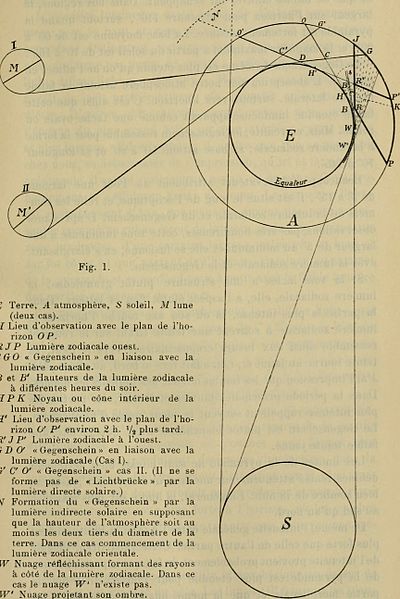
The Gegenschein is a faint patch of light visible in the night sky directly opposite the Sun. Best seen in exceptionally dark skies, this glow is thought to be the result of sunlight reflecting off interplanetary dust, especially meteoric particles.
But in 1908, this simple explanation wasn’t so widely accepted. Instead, the Gegenschein was the subject of astronomical speculation and wonder.
A “Heavenly Body” in Earth’s Orbit?
According to a June 27, 1908 article in The Tucumcari News, famed astronomer Professor William H. Pickeringproposed a bold new theory:
The Gegenschein might actually be a ghostly satellite—a massive cloud of meteors orbiting the Earth.
Pickering theorized that this cloud of meteoric material followed Earth in its yearly orbit, always remaining on the side opposite the Sun. In essence, it was like a shadow twin, eternally out of reach but faintly visible under the right conditions.
He went even further, suggesting that this satellite cloud could be as large as the planet Jupiter—roughly 86,000 miles in diameter. That’s nearly the size of the largest planet in our solar system, made up entirely of space dust and rock.
Why It Captured the Imagination
At a time when space exploration was a dream and telescopes were just beginning to uncover the wonders of the cosmos, the idea that Earth had an invisible companion stirred both scientific and public curiosity. The Gegenschein became a canvas for wonder—a question mark in the sky that symbolized how much we had yet to learn.
The Gegenschein Today
Modern astronomers understand the Gegenschein as a concentration of zodiacal light—sunlight reflecting off cosmic dust in the solar system. Still, there’s something beautiful in the older theories. Pickering’s poetic idea of a Jupiter-sized, ghostly satellite orbiting the Earth reminds us that science is built on imagination as much as observation.
Sources:
The Tucumcari News, June 27, 1908
Historical commentary based on public domain material