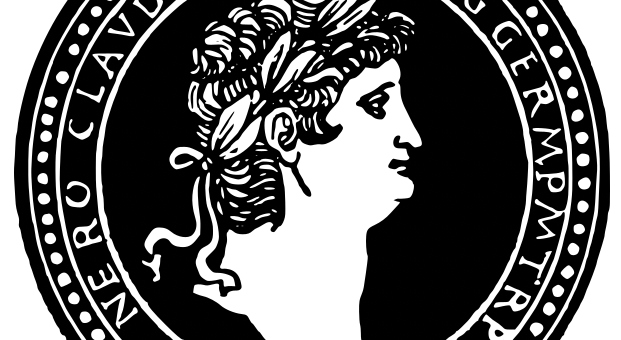
The reign of Nero, from 54 to 68 AD, remains one of the most fascinating periods in Roman history, marked by egregious scandals and deep-seated political intrigue.
This notorious emperor, often depicted as a tyrant and hedonist, presided over a Rome where betrayal and drama were as common as the games in the Colosseum.
Rise of Nero
Nero’s ascent to the throne was anything but ordinary. Adopted by the reigning emperor Claudius, who was his great uncle and later his father-in-law, Nero was thrust into the line of succession over Claudius’s own son, Britannicus.
Nero’s mother, Agrippina the Younger, was a key figure in his rise, exerting immense influence and, according to ancient historians like Tacitus and Suetonius, allegedly poisoning Claudius to ensure her son’s accession to the throne.
Murder of Britannicus
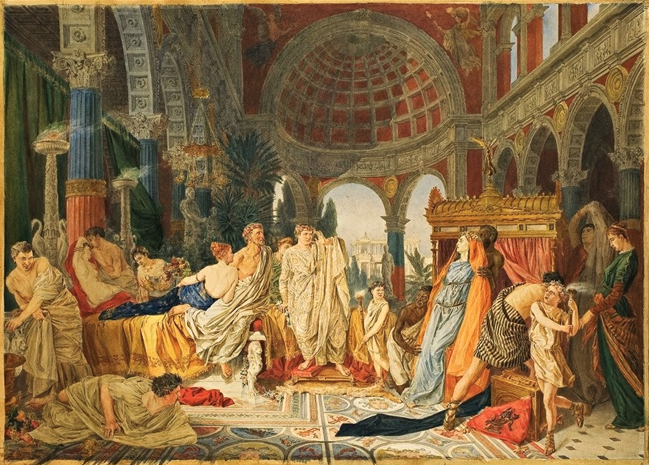
The political machinations did not stop with Nero’s ascension. One of the early and most chilling acts of his reign was the elimination of his young stepbrother, Britannicus, who posed a legitimate threat to his rule.
Nero’s involvement in Britannicus’s death at a dinner party, possibly through poisoning, set the tone for a reign that would be characterized by paranoia and ruthless suppression of rivals.
The Great Fire of Rome and Its Aftermath
Perhaps the most infamous episode during Nero’s reign was the Great Fire of Rome in 64 AD. The fire raged for six days and devastated much of the city.
It is widely speculated that he used the disaster to reshape the city’s architecture to his liking, including the construction of his lavish Golden House, the Domus Aurea.
The fire also led to one of the first recorded instances of state-sponsored persecution of Christians, whom Nero blamed for the fire (and who probably did start the fire as an act of religious terrorism).
Nero’s Artistic Pretensions and Public Response
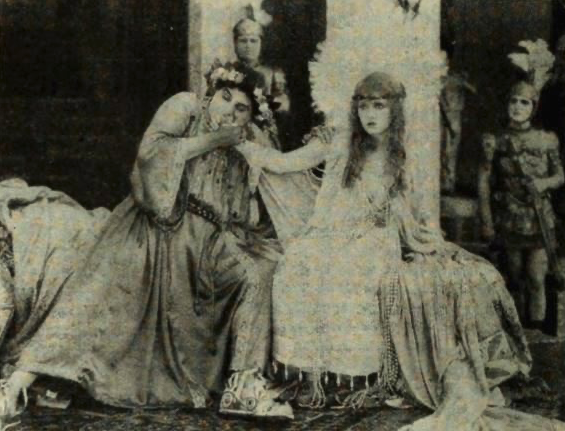
Nero’s obsession with the arts was another aspect of his rule that often bordered on scandal. He fancied himself a poet, musician, and actor, frequently performing in public to the discomfort of the Roman elite, who found his behavior unbecoming of an emperor.
The performances were not mere pastimes; they were politically charged events, as Nero used them to display his absolute power and to humiliate the aristocracy publicly.
The Fall of Agrippina
The political intrigue reached its zenith with the murder of his own mother, Agrippina. Initially his closest advisor and ally, Agrippina’s relationship with Nero soured as she tried to maintain influence over him.
Nero’s decision to eliminate her in 59 AD was motivated by his desire to rid himself of her controlling influence and to quell the rumors that she wielded the true power behind the throne.
Rebellion and Downfall
Nero’s rule ended as tumultuously as it began. The rebellion of 68 AD, led by the governor of Gaul, Vindex, and later joined by other influential figures like Galba, marked the beginning of the end for Nero.
As support for his regime crumbled, Nero fled Rome, and, facing imminent execution, ultimately chose suicide, reportedly declaring, “What an artist dies in me!”