It was December 31st, 1929.
The final afternoon of the year.
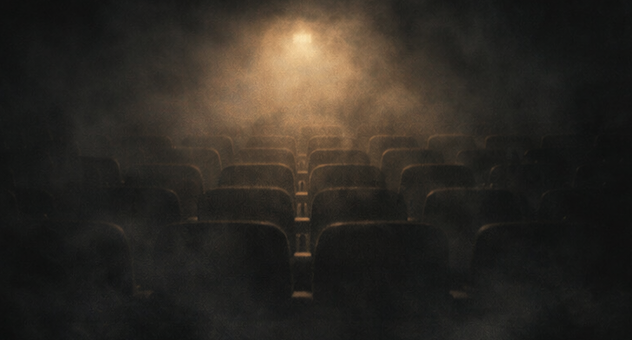
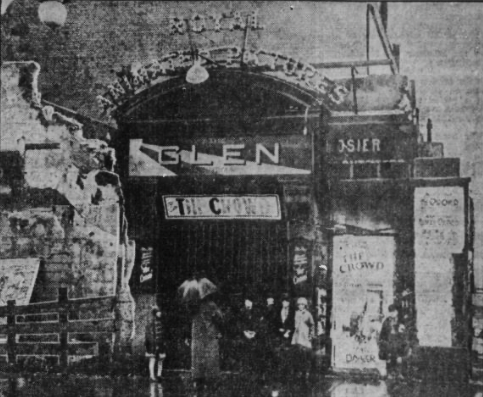
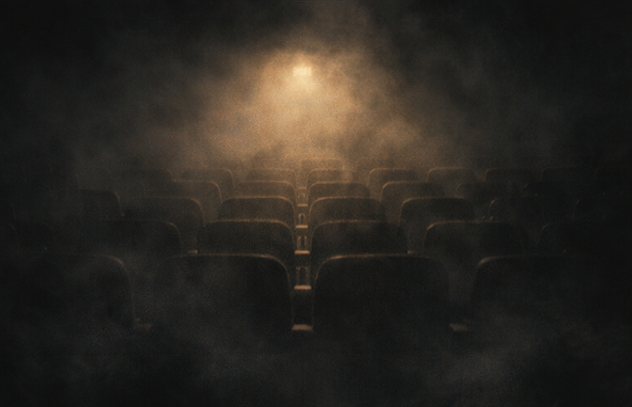
Inside the Glen Cinema, the seats were filled with children.
Hundreds of them.
Estimates would later place the number somewhere between seven hundred and one thousand.
Infants in arms. Toddlers perched on the edge of their seats. Young teenagers laughing, whispering, throwing glances toward the flickering screen.
For many, it was a rare treat. An afternoon escape.
At home, their parents were preparing for the night ahead – laying out food, tending to fires, getting ready to welcome a new year. They believed their children were safe.
Inside the cinema, the reels spun. Light flickered. Stories danced across the screen.
And then… one film ended.
Up in the projection room, the used reel was removed, handled as it always was, and placed into a metal canister.
It was routine. Ordinary.
But something inside that canister wasn’t right.
At first, it was barely noticeable. A thin thread of smoke. Then more. Thick, black, and oily.
It began to seep out, curling into the projection room, slipping into the air above the children below.
No flames, not yet, just smoke.
And confusion.
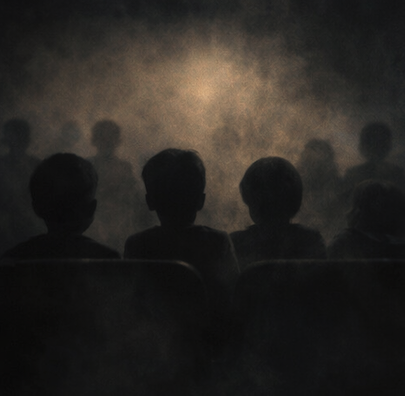
Down in the theater, the children shifted in their seats. Some pointed upward. Others laughed, thinking it was part of the show.
But the smoke kept coming.
Darker and heavier.
And then someone moved. Someone shouted. And in a room filled with hundreds of children, with only a few narrow exits, everything began to go wrong.
The First Signs of Panic
At first it wasn’t panic. Not really.
It was hesitation.
Children turned in their seats, craning their necks toward the ceiling as the smoke thickened above them. It drifted like a dark cloud, unnatural against the soft glow of the screen.
A few began to cough.
Some thought it was part of the picture, a trick of the light, a scene bleeding beyond the frame. But the air was changing. And it was changing fast.
Upstairs, in the projection room, the situation was already slipping out of control. The smoke pouring from the canister wasn’t slowing. It was growing, feeding on something volatile and unstable.
Then, the smell reached the audience. A sharp, chemical bitterness.
One child stood. Then another.
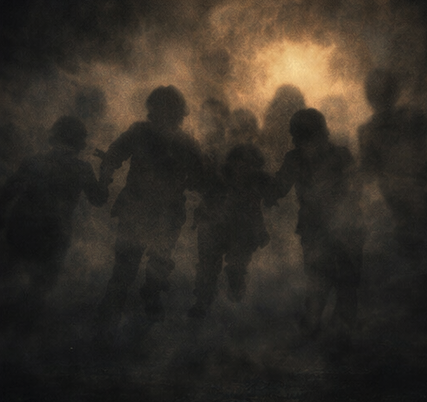
A ripple moved through the crowd. It was not yet fear, but awareness. A shift in the atmosphere. The unspoken understanding that something wasn’t as it should be.
And then a shout from somewhere inside the theater.
“Fire”
The children closest to the exits began to move first, slipping from their seats, unsure whether to walk or run.
Behind them, hundreds more followed. Too many and too quickly.
The aisles, narrow even on a normal day, began to choke with movement. Small bodies pressing forward. Hands grabbing at coats, sleeves, anything to stay together.
Some of the youngest didn’t understand. They were lifted, pulled, carried, or lost.
The smoke was thicker now, pushing downward, swallowing the light. The screen still flickered, but it no longer held their attention.
The exits.
Everyone was thinking of the exits.
But the exits were not ready for them. And as the first wave of children reached the doors, they did not open the way they expected.
And in that moment confusion turned into fear.
And fear… into panic.
The Doors
The first children reached the exit in seconds.
Down the stairs – fast, too fast – feet slipping, hands dragging along the walls for balance as the weight of the crowd pressed behind them.
They weren’t thinking anymore. Not clearly.
Only one thought remained: Out.
The door at the bottom led to Dyers Wynd. An escape. Or at least, it should have been.
The first child reached for it, grasped the handle, and pushed.
Nothing.
Another tried. Then another.
Hands slipped. Pushed. Pulled harder. But the door did not move. Because it wasn’t meant to open outward. It opened inward. And behind it there was no space left to pull it open.
More children surged down the stairs, unaware of what waited below. The pressure built instantly – small bodies pressing forward, shoulder to shoulder, back to chest.
The cries tangled together, lost in the rising noise.
But the door… The door was also locked.
Padlocked.
A barrier no one in that moment could overcome. And still they came from the rows above, from the aisles, and from the darkness filling with smoke.
Children at the front were forced harder against the door, their hands still reaching, still trying to find a way through that didn’t exist.
Those behind couldn’t see and couldn’t stop.
The staircase had become a funnel. And at its base was a wall.
The weight of hundreds pressed downward, compressing the space, tightening it, turning movement into something else entirely. Something trapped and irreversible.
The noise changed. The shouting, once scattered, became desperate, then strained, then muffled beneath the sheer force of bodies pressing into a space that could not expand.
Up above, more children were still trying to escape. They didn’t know that the exit they were running toward had already failed.
And in that narrow passage leading to Dyers Wynd the disaster found its shape.
When the Doors Finally Opened
Outside, the first signs of trouble had already begun to draw attention.
Authorities arrived.
A policeman pushed through the gathering crowd and made his way to the exit at Dyers Wynd. The same door the children had been running toward. The same door that refused to open.
He saw the lock. And he understood.
There was no time for keys. Only force.
The metal resisted at first, but not for long. The padlock gave way under repeated blows, snapping open at last.
And for a brief moment, it must have seemed like the worst was over.
The door was free. It could open. It should open.
But it barely moved.
Something on the other side was holding it shut.
The door opened inward, and behind it there was no empty space.
Others rushed forward to help, forcing the door inch by inch, pushing against what had built up behind it. It began to give, but slowly.
It was enough to reveal what had been hidden.
A mass of children, pressed tightly in the narrow space. Some still trying to move. Some being pulled free as rescuers reached in, grabbing arms, coats, anything they could hold onto.
Those who could still climb did.
Desperately, over one another, toward the opening. Toward air. Toward escape.
But for many, the struggle had already passed.
Inside the cinema, firefighters were forcing their way through another path.
They moved quickly, breaking windows, shattering glass to create new exits where none had existed before. Hands reached through the openings, pulling children out one by one, lifting them into the cold air outside.
Some children had never left their seats. They had stayed where they were, confused, perhaps waiting for instruction that never came.
Those children were carried out by the firefighters, removed from the smoke-filled theater one at a time. Alive.
Outside, the street filled with noise, movement, urgency.
But beneath it, something else was beginning to settle in. A realization that not everyone had made it out.
The Aftermath
By the time the smoke began to clear the noise had changed.
No longer the frantic shouting of escape, but something heavier. Disjointed cries. Names being called into the cold air. Questions no one could answer.
Outside the Glen Cinema, the street filled with people. Parents.
Some still in their aprons. Some who had run out without coats.
All of them drawn by the same terrible instinct that something had gone wrong where their children were supposed to be safe.
They gathered in clusters, scanning every face that emerged. Waiting. Hoping.
Each child brought out was met with a surge of relief or a growing dread.
Because for every child carried into the open air there were others who did not follow.
Inside, the work continued.
Firefighters moved carefully now. Slower. Methodical. Searching every row, every corner, every space where a child might still be found.
The seats. The aisles. The narrow passage near the door.
One by one, they were brought out and laid gently in rows.
Covered with coats and with blankets.
The number grew. And with it the understanding.
This was no small accident. This was something else. Something final.
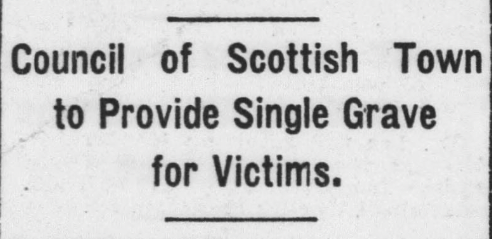
Seventy-one children would not return home that night.
Seventy-one.
In a single afternoon, on the final day of the year, as dusk fell over Paisley, the celebrations that had been prepared inside warm homes were quietly set aside.
Tables remained untouched. Candles burned low. Clocks ticked toward midnight unnoticed.
Because across the town, there were beds that would remain empty.
And in the days that followed, questions would come.
About the door. About the lock. About how something meant to protect had failed so completely.
But on that night there were no answers. Only silence.
And the weight of a loss that settled over the town, and never fully lifted.
What Changed After the Glen Cinema Disaster
The grief in Paisley did not fade.
It hardened into questions, into anger, and into a demand for answers.
How could a room filled with children have no safe way out?
Investigations began almost immediately.
Officials examined the layout of the Glen Cinema, the exits, the procedures, and every decision that had turned a moment of confusion into a catastrophe.
And what they found was as simple as it was devastating.
The door that led to Dyers Wynd opened inward. And it had been locked.
Not out of malice, but out of routine. A precaution meant to prevent unauthorized entry, a way to maintain order. It was the kind of decision made every day without a second thought.
Until the day it mattered most.
Public outrage followed, because this wasn’t just about one cinema. It was about every theater, every hall, and every place where people gathered in large numbers – trusting that if something went wrong they could leave.
And slowly change began.
New safety standards were introduced. Exit doors were redesigned to open outward so that a crowd pushing toward them would force them open, not seal them shut.
Locks on emergency exits became unacceptable. Because an exit that cannot be used in an emergency is not an exit at all.
Fire safety measures improved. Inspections became stricter.
Capacity limits, and how crowds moved within a space, were taken more seriously.
These changes did not happen overnight. But they happened because of what occurred inside that cinema.
Because of seventy-one children. Their names, read in newspapers. Spoken in homes. Remembered in a town that had lost too much, too quickly.
Today, when you walk into a theater, when you glance at an exit sign glowing faintly in the dark, when you push open a door that swings easily outward, you are seeing the legacy of tragedies like this one.
Rules built into the walls. Into the rules meant to keep people safe.
But behind those rules are stories.
And behind those stories are people.
Children, who went to see a film on the last day of the year, and never came home.