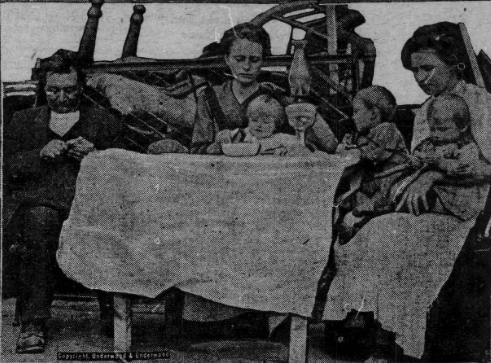
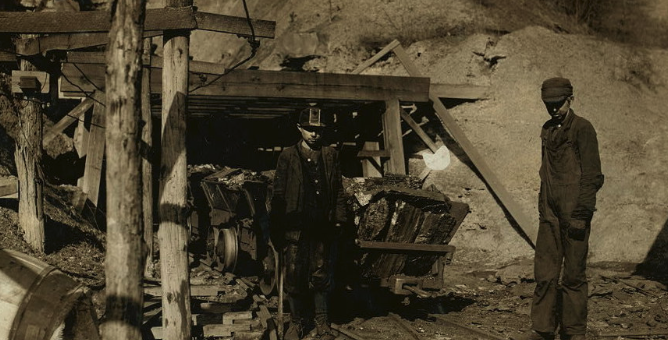
The Cross Mountain coal mine disaster was already a scene of grief, smoke, and exhaustion when rescuers made a terrible discovery: not all of the trapped men had died quickly, and not all of the living could be easily saved.
Deep inside the shattered mine, where dust, fumes, darkness, and terror pressed in from every side, rescue crews followed chalk marks left by desperate miners. Bodies were being carried out. Families waited above ground. Doctors stood ready near the mine entrance, hoping there might still be someone alive beneath the mountain.
Then came a report almost too strange and heartbreaking to believe.
Two miners, believed to have survived the blast, had lost their minds in the darkness. Instead of coming toward the men trying to save them, they fled deeper into the mine, screaming and vanishing into black passageways like frightened animals.
The following account, published in 1911, captures the grim rescue efforts at Cross Mountain.
Miners Lose Minds
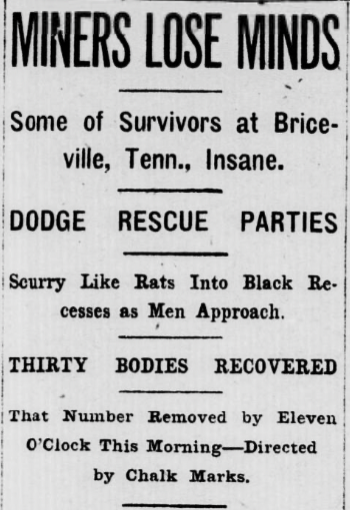
Spurred on by last night’s discovery of survivors of the dust blast in the Cross Mountain coal mine, fresh rescue squads went into the cross entries this morning, hacking and digging with redoubled energy. Their only reward, however, was the discovery of a corpse-strewn chamber far back in the mine.
Six bodies were recovered. Two of six identified. One was Joseph McQueen, a widower. The other, Tate Vallalee, had a wife and four children.
Stricken mad, probably from fear inspired by their plight, two miners, who had been with the party rescued last night, are now dashing wildly in and out of channels in the far recesses of the mine. All night long, men of the rescue squad have been chasing the maniacs, but just as soon as would-be rescuers get close on their trail, the mad men would dash away, screaming wildly. First they scurry like rats down the main entry, then scamper away into black recesses of the mine at the approach of men from the outside.
News Kept From Families
BRICEVILLE, Tennessee. — The maddened miners are believed to be John Duff and John Smith. News of their plight is being kept from their families, who have given them up for dead.
Additional squads of men have been sent into the mine. They will attempt to run down the two maddened miners before they penetrate a chamber filled with lethal fumes.
A federal official took charge of the chase this forenoon, but up to 2 o’clock the crazed survivors of the dust blast eluded pursuit. Once a squad traced the men to a chamber, but before they could ben penned in, they crept into a dark corner in the main shaft and when the party passed them, they scurried screaming back into the inner workings.
The Knoxville Iron Company, owner of the ill-fated mine, has provided every attention for the five survivors taken from the mine last night. The president of the company, T.L. Stephenson, has slept scarcely a wink since the disaster.
A big squad of doctors came to the fore last night, outranking undertakers’ assistants, who had almost taken possession of the mine’s outer chambers before the five men were brought out alive. The doctors will lessen the tension under which the entombed miners have strained before they will be taken into the open air. Near the mine opening, plaster masks will be placed over the faces of survivors, and they will be wrapped in warm blankets.
Hesitate at Digging Graves
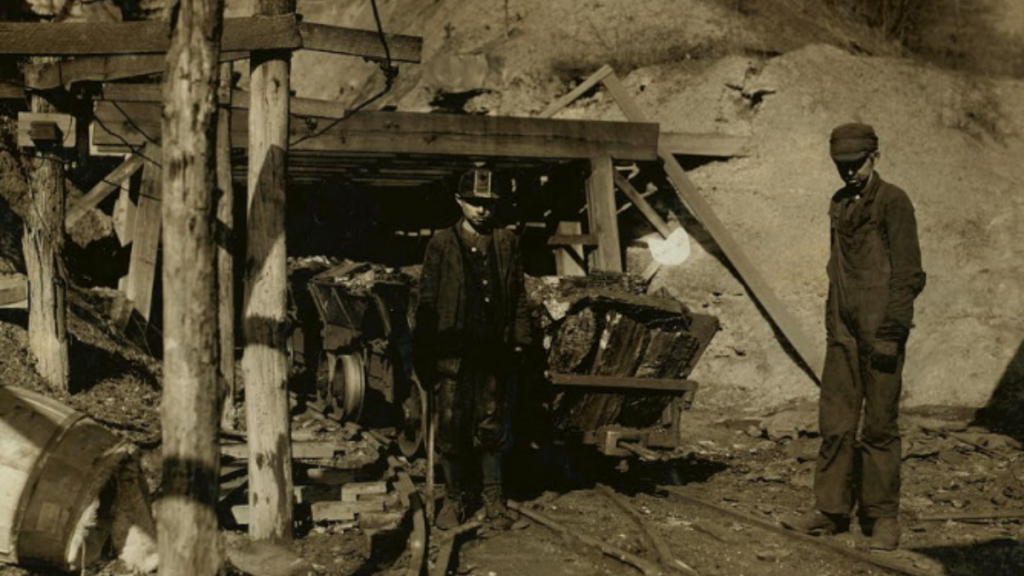
Not the most unique feature of the rescue work is the aversion of the miners to digging graves. They will take their lives in their hands at rescue work, going far into the chambers of the ill-fated mine, but they hesitate at digging holes for bodies of their fellow workmen.
Director Chandler of the rescue work was compelled to go among the miners and plead with them before a sufficient number volunteered for grave digging. Most of the victims are buried as soon as their bodies are recovered.
Additional signs of life were discovered in the mine at 10 a.m. On the walls of the main shaft were inscribed these words:
“We have gone to 23.”
Follow Chalk Mark Directions
Immediately the rescue squad redoubled their efforts to reach cross section No. 23 of the mine. It is believed several of the miners will be found there.
At first the inscription was believed to be the grim humor of one of the trapped miners, but a crudely drawn index hand, aimed at entry No. 23, pointed out the way.
The rescue party penetrated into cross entry No. 23. No miners were found there, but additional directions for their rescue were found scrawled in chalk on the walls. They evidently were compelled to change their vantage points on account of altering air conditions. The rescue squad pressed on in the direction indicated by the chalk marks.
At 11 o’clock a total of 30 bodies had been removed.
Source: Evening Star, Washington, D.C. December 12, 1911.