During World War I, even the smallest scraps from the kitchen table could become weapons of defense.
In 1918, Americans were urged to save fruit pits and nut shells. Peach pits, cherry stones, walnut shells, hickory nuts, and other hard materials could be turned into a fine-grade charcoal used inside mask respirators.
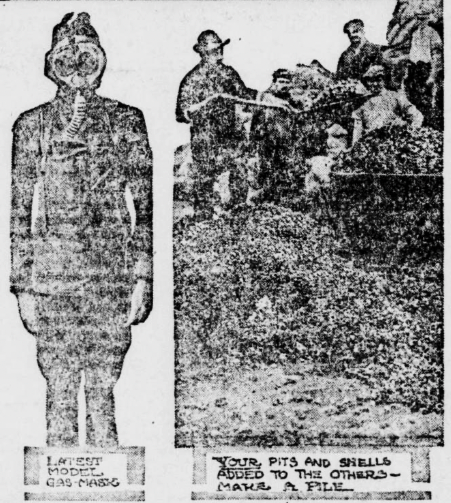
That charcoal helped filter poison gas from the air before it reached a soldier’s lungs.
The request was enormous. Government plants in Astoria, New York, and San Francisco needed staggering amounts of this material every day to keep production moving. The Red Cross turned the effort into a national drive, asking families, schoolchildren, and communities to collect, dry, and turn in the approved pits and shells.
Save Fruit Pits and Save Lives
“Gassed? Not if every American does his duty!”
One million pounds of fruit pits and nut shells are needed every day to keep busy the 750 men employed at the government plant at Astoria, New York, where the Gas Defense Division of the Army makes charcoal of a grade fine enough to filter German poison gas and give our soldiers the best masks that can be made. A second plant, at San Francisco, must be equally supplied.
The Red Cross is collecting this material in a national drive to save the lives of our soldiers. Every man, woman and child in the country can contribute in some degree. It is war work for the weakest hands. Two hundred peach pits or seven pounds of nut shells will make charcoal enough for one mask.
Individual savings may be small; when multiplied by millions of savers they become tremendously large.
Chemists have found that only the following will be of use: pits of peaches, prunes, plums, apricots, olives, cherries and dates; shells of walnuts, Brazil nuts, hickory nuts and butternuts.
Dry these materials before you turn them in. Do not mix other things with them. Nut meats should be taken out if possible, the Food Administration advises, as a food conservation measure; but whole nuts can be used.
Get the children into the woods, every one of them. Even “pig” hickory nuts will make good carbon.
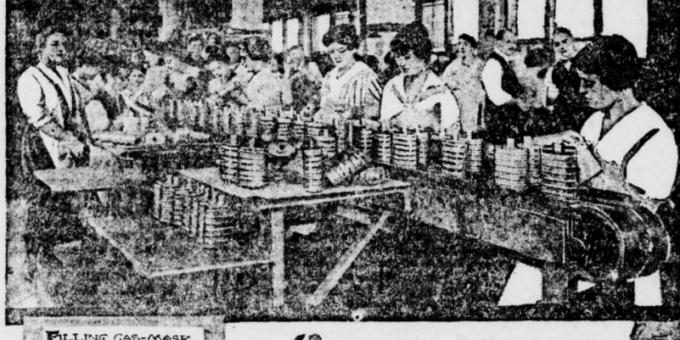
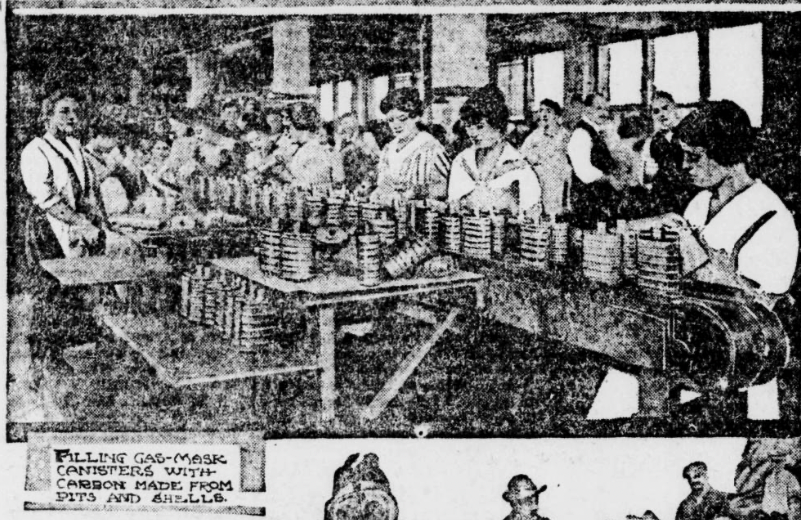
Anyone who organizes a nutting party and turns in the shells to the Red Cross is helping to win the war as directly as the women in the picture above, who are filling gas mask respirators with charcoal.
Source: East St. Louis Daily Journal. East St. Louis, Ill. November 3, 1918.