The aftermath of a great fire is often worse than the flames themselves. Once the smoke clears, what remains is not only wreckage, but the slow and terrible work of finding out who was lost.
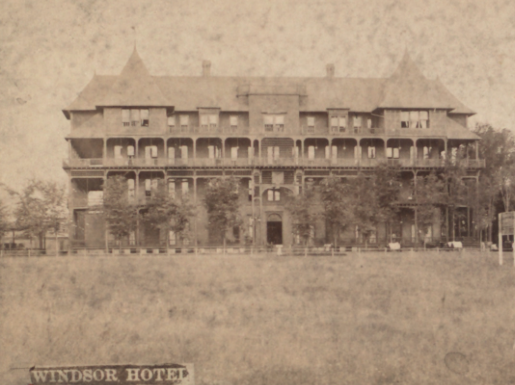
In March 1899, laborers began searching the ruins of New York’s Windsor Hotel while the site was still smoldering. Water continued to pour over the burned remains of the building, and among the ashes workers found the scattered belongings of former guests: jewelry, purses, papers, photographs, clothing, and other small traces of ordinary lives interrupted by disaster.
Then the search turned grim.
Near the entrance, workers uncovered a charred human leg burned beyond recognition. Soon after, more remains were found along the 46th Street side of the ruins. The condition of the bodies was so poor that men using picks and spades were called away, and others were ordered to search by hand, in the hope that any remains or personal items might be preserved.
At Bellevue Morgue, the bodies were described in cold, numbered detail. One was believed to be a man, missing the head, arms, and legs. Another was identified as a young woman, found in several sections, with a brown kid glove still on one hand and a single cent in the pocket of her black serge skirt.
This article is a glimpse into the human cost of the Windsor Hotel fire, where identity had to be pieced together from buttons, gloves, clothing, and whatever the flames had failed to consume.
Parts of Bodies Found
NEW YORK. — Search of the ruins of the Windsor Hotel was begun by a large force of laborers. The fire is still smoldering, despite a steady pour of streams of water from two fire engines throughout the night.
The big office safe was dug out apparently intact. Numerous small articles, such as jewelry, purses, bundles of papers, photographs and wearing apparel, which had belonged to occupants of the hotel, were gathered up.
At 9 o’clock the charred leg of a human being was found near the entrance, burned beyond any identity.
The workmen with picks and spades were called off, and others put to work who were to use only their hands. It was felt that the bodies, if any were uncovered, would be so badly burned that identification would be almost impossible except by means of some personal belongings.
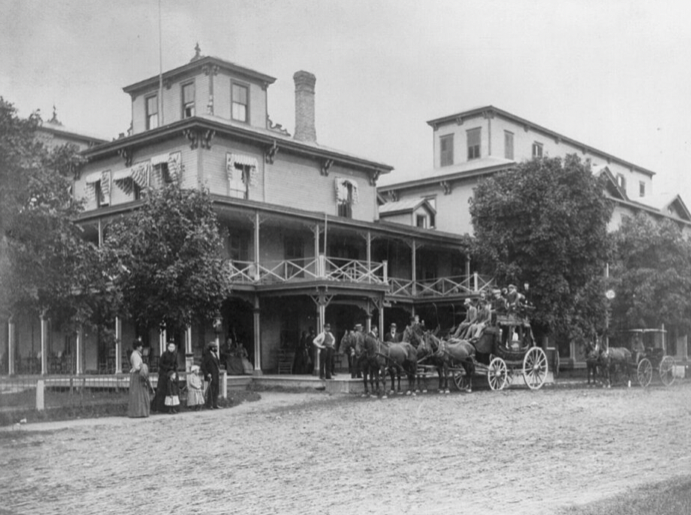
The first body found was discovered a little later by the workmen on the 46th Street side of the ruins, ten feet from the sidewalk, and twenty feet from the rear of the building. The first seen of it was the skeleton of the breast, including the ribs and breastbone.
Close by, a foot with nearly all the flesh on it was found. It appeared to have been severed from the leg by the falling of some heavy piece of debris where the office had been. It, like the first, was burned beyond the possibility of recognition.
The bodies were examined at Bellevue Morgue after being taken there in the dead wagon.
Body No. 1 is that of a man. The trunk is near complete, but the legs, arms, and head are missing.
Body No. 2 is that of a young woman. It is in six or seven sections. A part of a brown kid glove with pearl buttons was found on one hand. The jacket is of Tibet cloth, the color of which is unrecognizable, and the skirt is of black serge. A black cloth button on the dress is marked “Made W. & K. Company, Extra.” In the pocket of the skirt was a cent.
Source: Decorah Public Opinion. Decorah, Winneshiek County, Iowa. March 22, 1899.