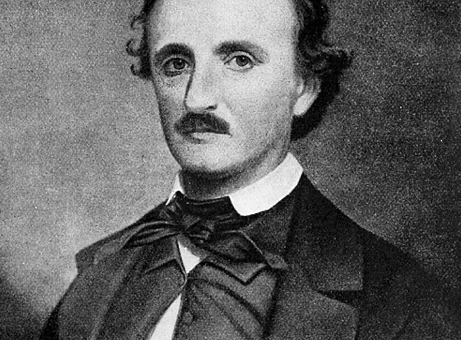
Edgar Allan Poe has always been difficult to separate from his legend.
To many readers, Poe is remembered as the haunted genius of American literature. He was brilliant, melancholy, unstable, and forever shadowed by drink, poverty, and death.
But in 1926, two writers argued that part of this dark reputation may have been unfairly built from another man’s life, that of Poe’s older brother, William Henry Leonard Poe.
According to Hervey Allen and Thomas Olive Mabbott, earlier biographers may have blurred the lives of the two brothers together, especially during the mysterious years of 1827 to 1829.
Henry Poe, they claimed, was himself a troubled and talented young writer. He had a fondness for drink, a melancholy imagination, and a taste for adventure. He may have traveled by sea to Europe, the Mediterranean, the West Indies, and South America before dying young of tuberculosis.
The argument did not erase Edgar Allan Poe’s own struggles, but it offered a new defense of his character. Some of the wild adventures and personal failings attached to Poe’s name, the authors suggested, may have belonged partly to Henry instead.
Poe’s Character Gets New Defense
A false impression of the life of Edgar Allen Poe prevails in the national mind as the result of biographers confusing his life with that of a little known brother, it is contended by Hervey Allen and Thomas Olive Maggott in a biography of William Henry Leonard Poe, the brother, to be published soon.
Henry Poe, as the authors call him, was born, like his brother, in Boston, in 1807. He died in 1831. He was Edgar’s elder by two years. The authors do not find confusion in the general character of the brothers, due to alleged composite pictures in previous biographers’ writings, for, they assert, the brothers were much alike, but they perceive a confusion of the brothers’ experiences.
Henry Called Rather Wild
“Henry,” they say, “is known to have been rather wild, to have early developed a fondness for drink, to have been fond of female society — and to have died young. That he must also have possessed a considerable charm, not a little talent, a somewhat precocious development, and a vivid imagination — what little we have from his immature pen seems clearly to indicate.”
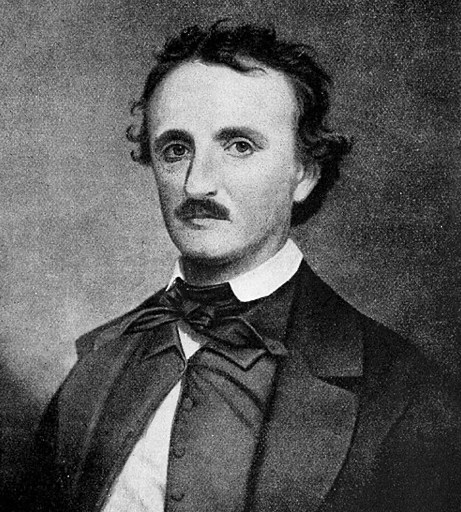
Even Henry’s physical appearance was much like that of Edgar, but he was a little taller. He wrote poetry on lugubrious themes, was either enlisted in the Navy or attached to a merchantman, suffered from melancholy and died early of tuberculosis.
“From various incidents,” says the collaborators, “which Edgar Poe afterward incorporated into his own biography, it seems likely that Henry visited the Mediterranean, the Near East, and possibly Russia. It is probably that he made one or two general European voyages and at least one to the West Indies and South America, as he indicated himself in his work.
“His adventures at least furnished forth a chapter of life which was appropriate and perhaps enlarged upon by his younger brother (Edgar) for trade purposes. It now appears, indeed, that many of the standard biographies of Edgar Allen Poe are in reality partly a synthesis of Henry’s and Edgar’s lives, especially in regard to the years 1827-29.”
Henry Poe, say the authors, was, in 1827, editor for six months of the North American, an obscure literary magazine from which some of the material in the forthcoming book, “Poe’s Brother,” was taken. In this magazine appeared excerpts from “Tamerlane” above Henry Poe’s initials, Edgar then being enlisted in the Army under an assumed name and in disgrace following his expulsion from the University of Virginia for debts.
Source: Evening Star. Washington, D.C. December 3, 1926.