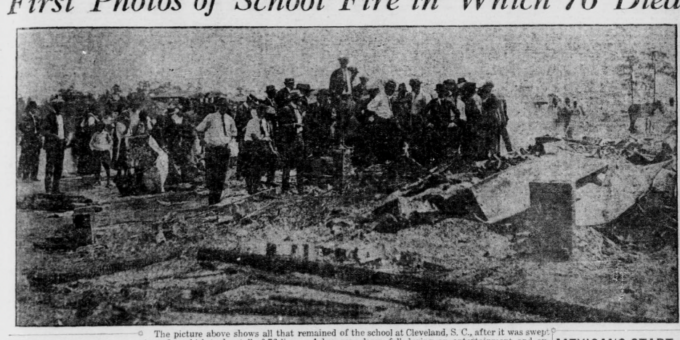
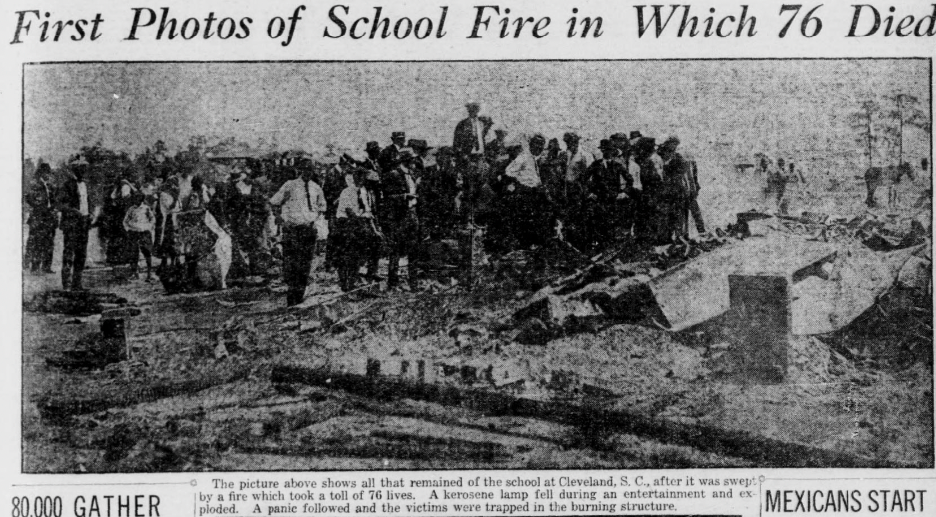
In the small township of Cleveland, South Carolina, families had come together inside the schoolhouse, filling the building with neighbors, children, and familiar faces. But by the end of that Thursday night in May 1923, the schoolhouse was gone, and so were 76 people, including 41 children.
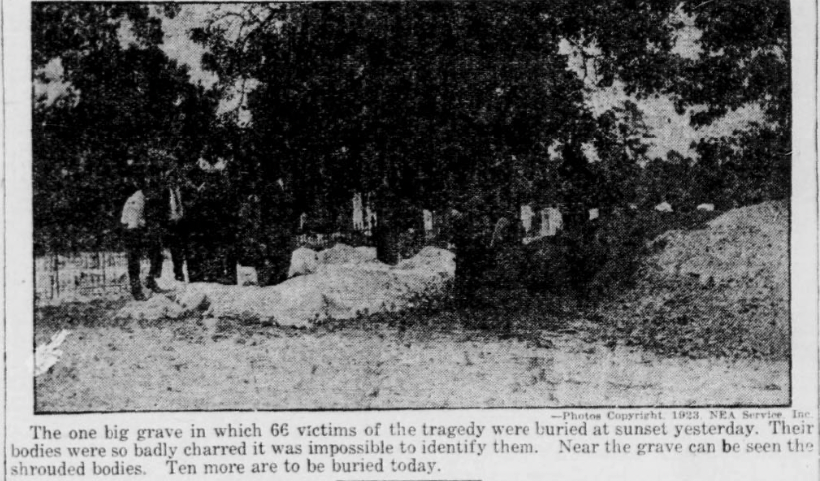
The fire swept through with such speed and horror that the little community was left stunned beneath a grief almost too large to bear. Bodies were recovered from the ruins and laid to rest together, 66 of them lowered into one common grave beneath a single mound at the edge of town.
Yet amid the devastation came stories of courage. Men stayed at the windows of the burning building, lowering women and children to safety until the floor collapsed beneath them. A young boy helped save 17 people by placing a flagpole against a window and urging the trapped to slide down.
The Cleveland school fire became one of those tragedies remembered not only for the number of lives lost, but for the final acts of bravery carried out in the heat, smoke, and terror of a burning school.
66 School Fire Victims in One Grave

CLEVELAND, South Carolina. — With the simple reverence of village people stricken by a calamity almost too great for them to comprehend, this little township is burying its dead — the 76, including 41 children who perished in the schoolhouse fire Thursday night.
One mound in the cemetery on the edge of the township marks the grave into which 66 bodies were lowered amid touching scenes last evening.
Today, the 10 remaining victims were to be buried.
As the first paroxysm of grief waned today, stories of great and simple heroism came to light.
Two men, who lie in the common grave, stood at the windows of the burning school, lowering women and children as far as their arms would reach and then dropping them to safety below. They stayed at their post until the collapse of the floor sent them to a fiery death.
A young lad, also nameless, saved 17 by placing a flagpole against a window ledge and shouting to those in the hall to slide down.
Source: The Washington Daily News. Washington, D.C. May 19, 1923.