When we think of Ancient Rome, grand architecture, gladiators, and conquests often come to mind. But behind the empire’s military might and cultural legacy lies something surprisingly humble and delicious: cheese.
Yes, cheese was not only a staple in the Roman diet, but it played a surprisingly influential role in daily life, religious customs, and the expansion of Roman culture across Europe.
A Daily Staple for Rich and Poor Alike
Cheese was a nutritional cornerstone in the Roman diet. It provided a valuable source of protein and fat in an era when meat was a luxury for most people. Whether you were a farmer, a senator, or a soldier, cheese was likely part of your regular meals.
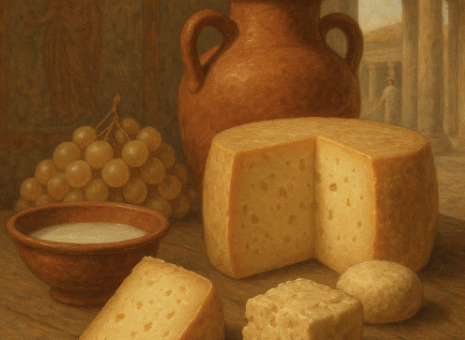
The wealthy enjoyed fine-aged cheeses, often served with fruit, nuts, or drizzled with honey. For the working class, cheese was a practical and filling companion to bread and olives. Its long shelf life made it especially useful in a time before refrigeration.
Cheesemaking: An Evolving Art
The Romans were not content with simple curds and whey. They experimented with aging techniques, climates, and animal milks to produce a range of cheeses – from fresh, soft varieties to dry, hard cheeses that could be stored and transported over long distances.
They understood how factors like pasture quality and the aging environment affected the final product. These ancient innovations helped lay the foundation for European cheesemaking traditions that still survive today.

Cheese in Roman Cuisine
Cheese was more than a snack, it was an ingredient used in a wide array of Roman dishes. The famed Roman cookbook Apicius includes several cheese-based recipes, mixing cheeses with herbs, honey, and wine. It was grated over flatbreads, stuffed into pastries, and even melted into sauces.
The Romans had a particular love for blending sweet and savory flavors, and cheese played a starring role in creating these rich combinations.
Military Rations and the Spread of Cheese
Roman soldiers carried cheese as part of their field rations. Its durability and caloric content made it an ideal food during long campaigns. As Roman legions marched across Europe, they brought their cheesemaking techniques with them, influencing local dairy traditions in places like Gaul, Britannia, and Hispania.
In this way, Roman cheese culture helped seed the beginnings of some of Europe’s most iconic cheese regions.
Cheese and the Divine
Even the gods were offered cheese. In Roman religious ceremonies, cheese was a common offering during festivals and rituals. It was symbolic of abundance and nourishment, making it a fitting gift for deities overseeing harvests and home life.