
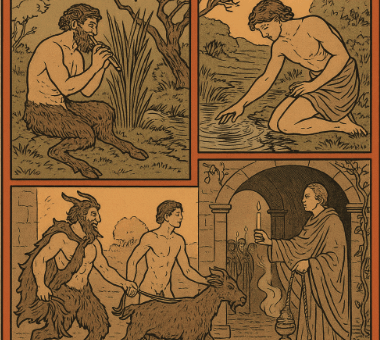
February, though today known as the second month of the year, was originally the last month of the Roman calendar. Its name comes from the Latin word februare, meaning “to make pure”, reflecting the ancient Roman festival of purification held during this time.
As the cold season neared its end and nature stirred toward spring, February became a month for ritual cleansing, new beginnings, and mythical stories that have echoed through the centuries.
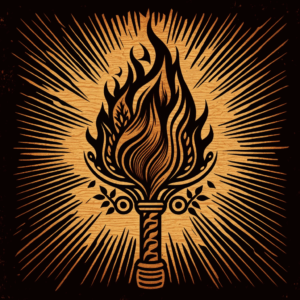
Lupercalia: A Festival of Fertility and Purification
At the heart of February’s ancient significance lies the Lupercalia, a Roman festival held on February 15 in honor of Lupercus, the god of fertility and new life.
Celebrated near a sacred cave on the Palatine Hill in Rome, the Lupercalia involved the sacrifice of goats and dogs. Priests, known as Luperci, would then cut the goat hides into strips and run through the city, striking passersby with the thongs.
Though it may sound strange to modern ears, this symbolic act was seen as a way to purify the land and promote fertility. Since shepherds originally celebrated the festival, it’s believed the rites symbolized the renewal of the fields and flocks as spring approached.
Some Romans believed Lupercus was the same as Pan, the Greek god of shepherds. Pan, said to be the son of Mercury, had a goat-like appearance with hair-covered body, goat feet and ears, and was known for his love of music, dancing, and forest play with the wood nymphs.
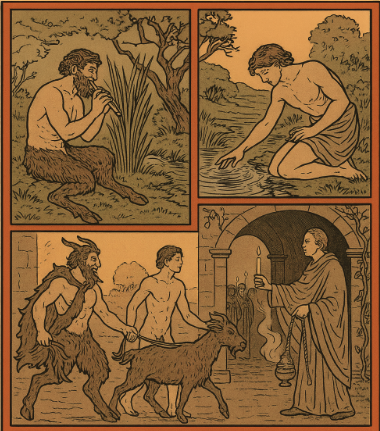
The Myth of Pan and Syrinx
One of the most famous myths associated with Pan tells of his pursuit of the wood nymph Syrinx. Fleeing his affections, Syrinx called out to the gods for help and was transformed into a clump of river reeds. Heartbroken, Pan fashioned the reeds into a musical instrument, the panpipes, or Syrinx, so he could forever hold onto her memory.
This tale was immortalized in the poetry of Elizabeth Barrett Browning, who wrote:
“What was he doing, the great god Pan,
Down in the reeds by the river?”
Satyrs, Bacchus, and Forest Revelry
The mythological woods of Rome and Greece were said to be alive with creatures called satyrs – half-human, half-goat beings who, like Pan, loved music, wine, and mischief.
One prominent satyr was Silenus, teacher and companion to Bacchus, the god of wine.
Bacchus, a son of Jupiter, is remembered for his wild travels across the earth in a chariot drawn by wild beasts, accompanied by a jubilant group of nymphs and satyrs crowned with ivy, who danced and sang in his honor.
The poet John Keats described the lively scene:
“’Twas Bacchus and his crew!
…young Bacchus stood
Trifling his ivy-dart, in dancing mood,
With sidelong laughing.”
Echo and Narcissus: A Tale of Love and Reflection
Among the most poignant February myths is that of Echo, a wood nymph who fell in love with the handsome hunter Narcissus. When he spurned her, she wasted away until only her voice remained – what we now call an “echo.”
Venus, the goddess of love, avenged Echo’s sorrow by causing Narcissus to fall in love with his own reflection in a pool. Entranced by the face in the water, he slowly pined away until the gods transformed him into a flower, the narcissus.
From Pagan Rituals to Christian Celebrations
The Roman themes of purification and rebirth carried into Christian tradition. On February 2, the Feast of the Purification of the Virgin Mary is observed. Known also as Candlemas, the day includes a procession with candles and the consecration of those to be used in the church throughout the year.
An old weather proverb links Candlemas to long winters:
“If Candlemas is fair and clear,
There’ll be twa (two) winters in the year.”
February in Early English Tradition
The Anglo-Saxons had several names for February. One was Sprout-Kale, a nod to the cabbage that began sprouting during this time. Later, they called it Solmonath, or “sun month,” because the sun begins rising higher in the sky, gently melting winter’s grip and heralding the coming spring.