The sirens began just after 2 a.m.
Los Angeles went dark ,streetlights blinked out, and neon signs died mid-glow.
The windows were covered and cars pulled to the curb.
The Pacific coast held its breath.
Weeks earlier, Pearl Harbor had been attacked. The West Coast was certain it would be next.
Radar operators had detected something offshore. Lights were reported in the sky. And at 3:16 a.m., the guns began to fire.
Searchlights slashed across the clouds. Anti-aircraft batteries thundered over the city. Shells burst in white flashes high above rooftops.
For nearly an hour, the United States Army launched more than 1,400 shells into the darkness.
Into something. Or… nothing at all.
When morning came, there were no enemy planes. No bomb craters. No wreckage along the coast. Only falling shrapnel. And five civilians dead.
A Nation on Edge
In February of 1942, America was not calm. It was waiting.
The attack on Pearl Harbor had shattered the illusion of distance. The War was no longer overseas. It had reached American soil.
Along the West Coast, rumors moved faster than radio bulletins. Japanese submarines had already been spotted off California. Oil installations were considered targets. Blackout drills became routine. Streetlights were dimmed.

Coastal cities practiced disappearing into darkness. And people slept lightly.
Every distant engine hum. Every flicker in the sky. Every unexplained sound over the ocean felt like the beginning of something.
Military radar was still new. And Operators were learning what was signal and what was interference.
Fear filled in the gaps where certainty could not. And on the night of February 24th, into the early hours of the 25th, Los Angeles was primed to believe that the next attack was already on its way.
The Contact
Just after 2 a.m., radar operators detected a contact off the coast. It appeared roughly 120 miles west of Los Angeles.
Then it was gone.
Minutes later, new lights were reported along the shoreline. Observers claimed to see something moving slowly over the water. Drifting.
At 2:21 a.m., the city was ordered into blackout. Streetlights snapped off again. Homes darkened. The coastline vanished into shadow.
Anti-aircraft crews moved into position. Searchlights began probing the sky, thin white beams cutting through low cloud cover.
And then, at 3:16 a.m., the order was given.
Fire.
The first shells burst high above the city. Then another. Then dozens more.
Batteries from Santa Monica to Long Beach joined in, filling the night with thunder.
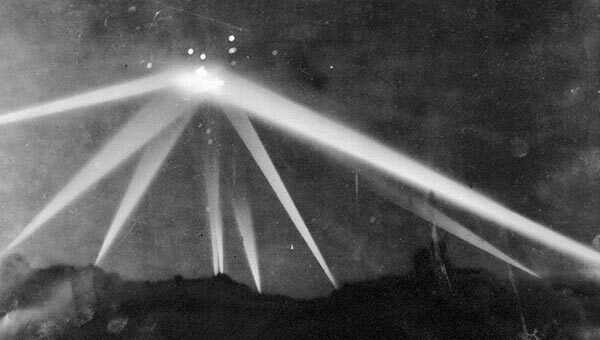
Searchlights converged on a single glowing point in the sky.
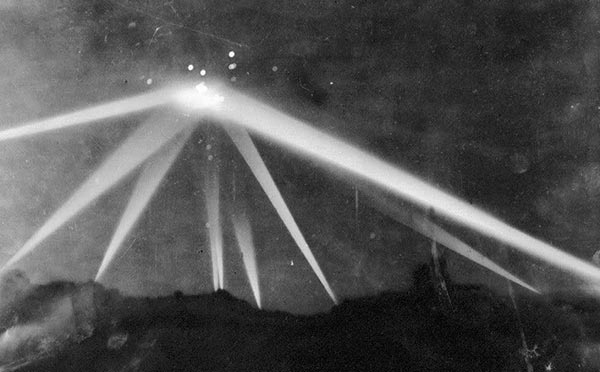
Witnesses would later say it hovered. That it moved slowly. That it seemed untouched by the explosions surrounding it.
For nearly an hour, more than 1,400 shells were launched upward. Smoke gathered. Debris rained down. Windows rattled miles inland.
And still, whatever had triggered the alarm did not fall.
What Was Seen… and What Wasn’t
By dawn, the firing had stopped. The smoke began to thin. And Los Angeles stepped cautiously back into the light.
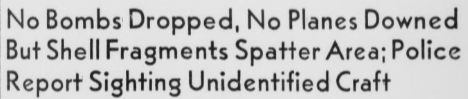
What remained was not wreckage. There were no shattered aircraft along the coastline. No oil fires burning in the harbor. No captured pilots.
The Pacific looked unchanged. But the city had not escaped untouched.
Shrapnel from falling shells struck buildings. Windows were blown out miles from the batteries. At least five civilians were dead — victims not of invasion, but of defense.
In the hours that followed, newspapers scrambled for answers.
Witnesses described lights in the sky. A glowing object. Something moving slowly above the city.
Some said it hovered. Others claimed it drifted steadily inland, illuminated by converging searchlights.
Many reported no engine noise. No roar. No return fire. Only bursts of artillery blooming around it, white flashes against a black sky.
And then… nothing.
Whatever had triggered the alarm left no debris behind. No confirmed aircraft. No physical trace.
Only photographs, searchlights locked onto something suspended in the darkness.
The Explanation
By mid-morning, officials began offering answers.
The incident, they said, had likely been caused by stray flares.
Later, the explanation shifted.
A weather balloon. Perhaps several. Carried by coastal winds.
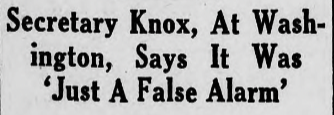
Military commanders described the night as a false alarm, a misidentification made in the tense weeks following war. The public was told there had been no enemy aircraft. No invasion attempt. Just nerves, interference, the fog of war.
And yet…
The photographs remained.
Searchlights converging on a single point. Artillery bursts illuminating something in the sky.
Radar operators had seen it. Civilians had watched it.
For nearly an hour, the United States Army believed it was real enough to fight.
The Sky at War
Perhaps it was nothing more than drifting equipment caught in the beam of searchlights.
Perhaps it was a lesson in how quickly fear can turn shadows into enemies.
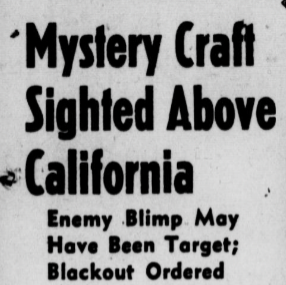
Or perhaps, on a cold February morning in 1942, Los Angeles briefly encountered something it did not yet have language for.
In later decades, when the term “UFO” entered the American vocabulary, the images from that night would resurface.
But in 1942, it was simply called an air raid. 1,400 shells were fired into the sky above one of America’s largest cities. Five civilians lost their lives. And whatever had triggered the alarm left no trace behind.
On February 25, 1942, Los Angeles went to war with the darkness above it.