In the winter of 1918, American troops in France were still adjusting to the brutal realities of trench warfare. The battlefield was not only a place of bullets, shells, and mud. It was also a place where the very air could become a weapon.
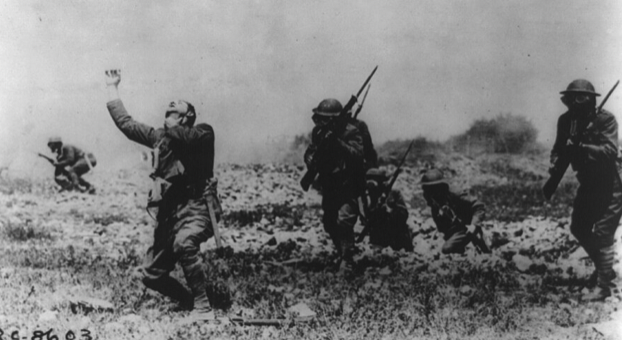
Gas attacks were among the most feared horrors of World War I. Chlorine and phosgene shells could roll silently through trenches and dugouts, choking men before they fully understood what was happening. A soldier who failed to adjust his mask quickly enough might collapse within moments, gasping for breath while doctors struggled through the night to save him.
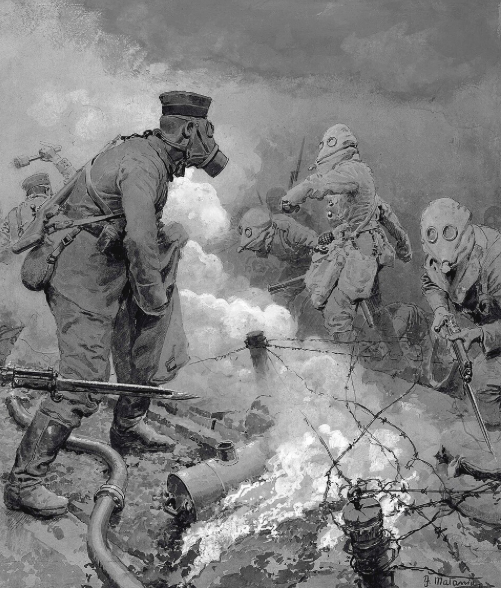
This report, published on February 27, 1918, describes one of the early German gas attacks on American soldiers in France. After a day of rain, the clouds parted and moonlight settled over the trenches. Then, without warning, German minenwerfers opened fire, sending gas and high explosives into the American lines.
Five men were killed. Sixty-one others were taken to the hospital. The article captures not only the terror of the attack, but also the anger it stirred among American troops who saw gas warfare as a particularly cruel weapon.
Five Killed, Sixty-One Taken To Hospital
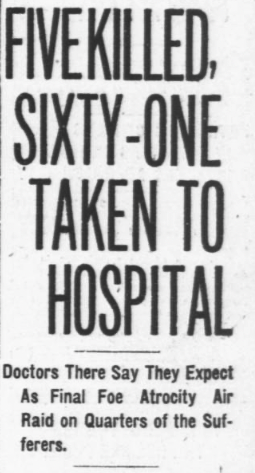
WITH THE AMERICAN ARMY IN FRANCE, Feb. 27, 1918. — Sixty-one American soldiers, gas victims, lay in the hospital today.
The doctors worked all night on the cases.
Five others were killed in the gas attacks.
Many of the hospital cases include artillerymen, who were overcome by fumes from gas shells.
The victims included boys from Massachusetts, Pennsylvania, North Carolina, Indiana, Kentucky, New Jersey, Tennessee, Rhode Island, Ohio, New York, Washington, and Arkansas.
Attack Sudden
The attack came suddenly early this morning after an all-day rain. The clouds had parted and the moon was shining brightly in the trenches. Stillness prevailed.
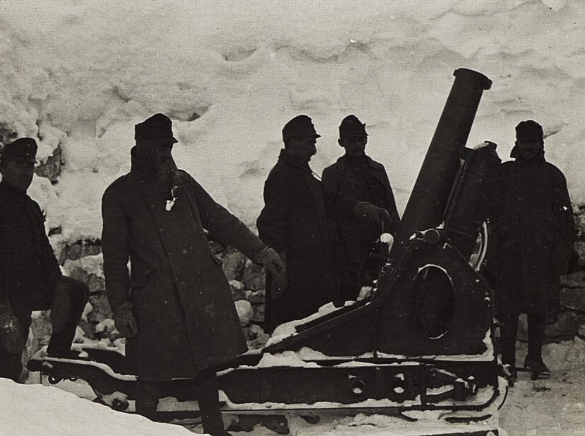
Suddenly there was a huge flare from the German trenches as the minenwerfers were discharged. Then came the detonations of high explosives, with the quick spread of deadly gases.
Three officers ran into a dugout and closed the curtain so tight they narrowly escaped death through asphyxiation from the charcoal fire. They were taken to a hospital, but their condition is not serious.
Three men were killed and nine overcome in this sector alone, during the first attack.
Men Use Masks
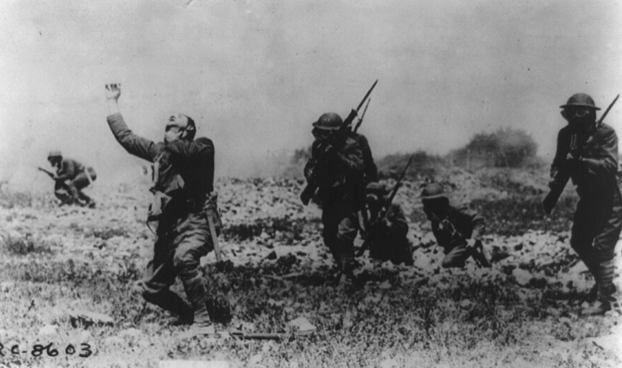
When the gas came over, the men endeavored to adjust their gas masks. Those who weren’t quick enough were soon gasping for breath.
The army has gas equipment and will use it as the occasion demands, but it is a matter of self defense. The Boches introduced the gas terror to the world. Its first use against the Americans has aroused the entire army to the stage of “seeing red.”
Stirs Hatred
It would stir the fighting blood of every American to view the hospital where lay the victims of the first German gas attack.
The gas victims were in a hospital which was recently repeatedly bombed. Doctors declared that the final act they might expect from the foe would be an air raid on the hospital while the gassed men were slowly passing out.
Between 1 and 2 o’clock Tuesday morning, gas projectiles were hurled from minenwerfers. There were two attacks, in which about 75 chlorine and phosgene gas shells, accompanied by high explosives, were thrown.
Small balls of fire were first visible, then the entire battery of minenwerfers let go, hurling gas and explosives simultaneously.
Wires Severed
The Sammies tried to reach their dugouts and also to signal their artillery for a barrage. The wires from this sector were found to have been severed and the barrage was delayed more than 40 minutes while rockets were sent up.
The barrage started at 2:20 a.m. and continued for 40 minutes.
Minenwerfers are fired electrically, the entire battery being set off simultaneously, the second attack coming before a barrage of gas projectiles. The projectiles were equipped with time fuses. They did not explode until they had landed in the American trenches. This is the first time the Boches have used time fuses.
In addition to this attack, an important village was gas-shelled three times during the night. The gas attacks continued through the day.
Source: The Washington Times. Washington D.C. February 27, 1918.