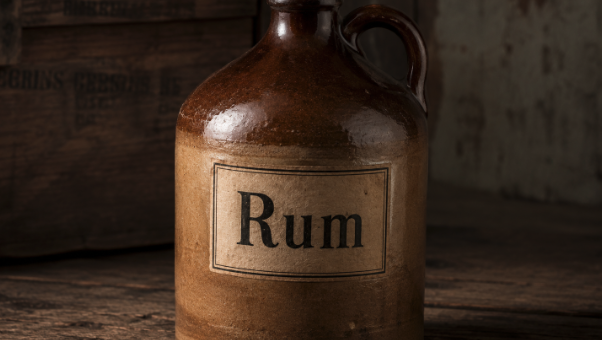
There is something wonderfully gothic about an old family tomb hidden behind a grand mansion, especially when that tomb comes with instructions involving a lead-lined coffin, an annual visit, and a jug of Jamaican rum.
The following 1904 newspaper story reads almost like a dark comedy written for a stage: a wealthy Maine patriarch, determined not to be forgotten after death, left behind a strange final command. Once a year, his heir was to enter the family tomb in Athens, Somerset County, and refill the rum inside his coffin through a little spout placed at its head.
It was, apparently, one man’s idea of immortality. If his descendants were tempted to let his memory fade, the yearly chore would drag them back to the tomb, jug in hand, to pay their unusual respects.
For years, the ritual seems to have been carried out without incident. Then one June, the duty fell to an heir who traveled from the city back to the old mansion, passed between the lilac bushes, hitched his horse out of sight, and went alone into the tomb. Inside, he filled the coffin as required. Then, in the dim light, he tripped over an uneven flagstone and slammed into the door.
The tomb door shut. The latch fell. And suddenly, the living heir was locked inside with the preserved ancestor.
Locked Up In Tomb
SOMERSET COUNTY, Maine. — One of the old family founders in Somerset County in northern Maine, left a heritage that just has proved a decidedly serious proposition to one of his heirs.
The family is among the wealthiest in the state. Years ago its pioneer went into Somerset County, and in time became the principal business figure of the section.
As he felt ago approaching, he put his men at work on the construction of a big tomb in the garden in the rear of the old mansion that stands as one of the show places in the town of Athens. On his deathbed he issued commands as to what his relatives should do with his body after dissolution. He ordered them to place him in the leaden coffin and after it had been stored in the tomb, to pour the coffin full of Jamaican rum.
The will went on to explain that the testator couldn’t bear the idea of being laid away in the tomb forever knowing that he would be left to molder forgotten. He wanted his relatives ever to bear him in mind, and his method of jarring their memory annually was this:
The will directed attention to the little spout sticking up at the head of the casket. The command was that annually each June, on the anniversary of the squire’s burial, the chief heir should enter the old tomb, bringing a jug of rum, and that he should replenish the supply in the coffin.
The family removed from the old mansion some years ago in order to afford the sons and daughter more advantages in one of the cities of Maine.
Recently the heir upon whom devolves the duty of carrying the jug of rum to the estimable and well-preserved old gentleman in Athens, suspended his business engagements for a day and started on his annual trip. He went to Solon by train and, hiring a team at the stable, rode across county.

The mansion stands a bit out of the village. When the heir turned in at the gate between the double rows of towering lilac bushes no one in the neighborhood happened to see him.
The visitor hitched his horse at the rear of the house, out of sight of the road, and then proceeded toward the tomb. He let himself into it, and when the overflow from the spout indicated that the coffin was filled, he started for the door.
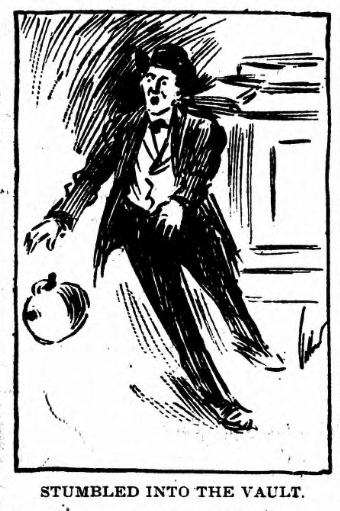
Now it chanced, says the New York Press, that through age and heaving by the frost, one of the flagstones with which the tomb is paved jutted its edge above its neighbors. In the gloom of the tome, the heir didn’t see the stumbling block and he struck it and tripped.
As he tripped, he lunged forward and slammed full tilt against the inside of the half-opened door. The door banged shut and the great catch outside fell into place. The heir was a prisoner in the tomb of his ancestor.
The door fitted very snuggly against the jam. The victim broke his fingernails in the cracks trying to start the door, but it was no use. The portal was immovable. There wasn’t an article in the tomb fit for a lever.
As the prisoner crouched at the door, feeling around him, his hand came in contact with the jug he had partly emptied. He was a temperance man and a churchman, but he realized that this was a case where heroic remedies were required. He tipped up the jug and began to numb his sensibilities.
That night a telegram was started for Athens inquiring the whereabouts of the heir. He had neglected an important business engagement. The telegram was delivered to the postmaster in Athens the next forenoon by a messenger, who drove over in a team and who had rapped on the door of the mansion without getting a reply.
Of course, the next thing was to open the tomb, and when the door was pushed back, the heir was pushed back with it. He was lying against the portal with his jug clenched in his hand and he was fully as dead to the world as his venerable ancestor in the leaden coffin. Both were preserved in the same fluid, applied in different fashion.
It took the doctor several hours to sober the heir off. The physician says that if the man had not had that rum at hand during his wait in the tomb he would have been taken out a raving lunatic.
Source: The Virginia Enterprise. Virginia, St. Louis County, Minn. August 5, 1904.