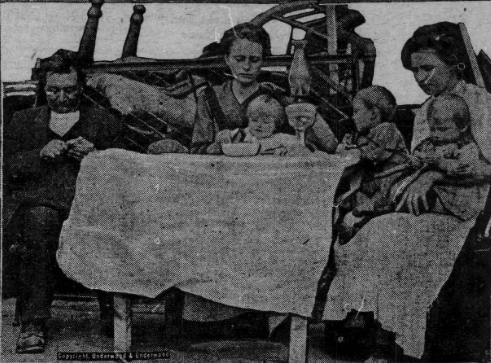
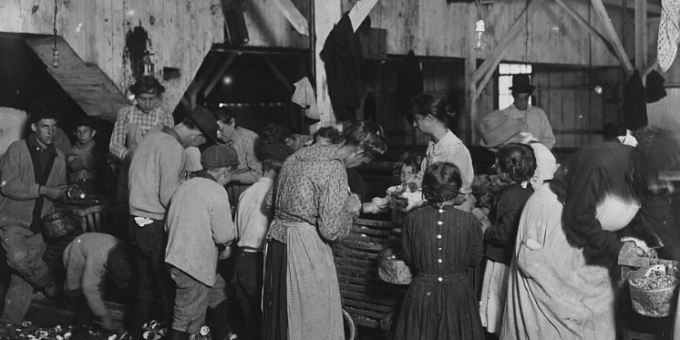
Between 3 and 4 each morning, while much of the town still slept, a sound rolled out over the Gulf Coast and called the workers to the oyster and shrimp canning factories. Among them were not only women and older children, but tiny boys and girls, some only 5 or 6 years old, hurrying into the damp rooms where they would spend the day shucking oysters or picking shrimp.
Inside the factories, the children stood beside their parents over steaming carts of oysters, filling pails for pennies by the pound. They worked on slippery floors littered with shells, handled knives that cut their hands, and later turned to shrimp picking, where acid from the shrimp heads burned their fingers.
One young worker described the sting plainly: it “burns like hell.”
The work was hard, wet, and dangerous, but the children were expected to help support their families. When strangers entered the factories, the smallest workers scattered beneath tables or hid under their mothers’ dresses, afraid the visitor might be an inspector.
This 1924 report from Biloxi offers a grim glimpse into the oyster camps of the Gulf States, where childhood could begin before sunrise and be measured not in schoolbooks or play, but in shucking pails, wounded hands, and the scream of factory sirens in the dark.
Tots, Aged Five, Go to Work at 4 A.M. in Oyster Camps of Gulf States

BILOXI, Mississippi. — Hush! It is the children’s hour.
Between 3 and 4 each morning, it comes ushered in an regularly as clockwork to the accompanying tumult of a hundred factory sirens, which proclaim the event for Biloxi’s tiny workers in the shrimp and oyster canning factories.
Mingling their wail with the roar of the sea, these blaring sentinels call into the gray hours before dawn an army of boys, girls, and women, bidding them haste to work lest daylight steal in and find them unoccupied.
Tots, 5 or 6 Years Old, Work
Most children who work in the oyster canning factories are tiny tots. From 5 to 14 their ages run. Many of the smaller children work with their parents, contributing their efforts to the common family shucking pail.
All day long you can see them in moisture laden rooms, bending over cars of steaming oysters, shucking away at the shells and filling pails with the meat for 5 cents a pound.
The workers stand, swaying back and forth with a rhythmic sort of motion, which experienced shuckers say enables them to increase production.
Empty shells are thrown on the floor. These afford treacherous foothold to the women and children who climb the slippery piles to reach farther for the oysters as they empty the cars.
Practically the same method is pursued in the preparation of shrimp, except the shrimp are iced and the women and children who work on them are called pickers, or peelers.

Those who shuck overs receive sharp cuts which often become infected from the oyster shells and from the knives used.
The shrimp pickers is attacked by both an acid in the shrimp head and a sharp thorn or prong which projects from its head.
This burning substance, which has the odor of strong ammonia, escapes from the shrimp when the shell is broken preparatory to squeezing out the meat.
When it gets on the picker’s hands, as one factory worker, a boy of 12, remarked: “It burns like hell, mister.”
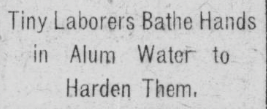
To protect themselves, the oyster shuckers wear gloves, and later in the season when they become shrimp pickers or peelers, they wear gloves, too, and bathe their hands in alum water to make them hard.
Shrimp pickers say they cannot work more than a week at a time.
“You gotta give your fingers a chance to heal up,” a little girl of 11 and the veteran of three factory seasons advised.
On the other hand, factory owners and employers if the child and women workers say they try to minimize the hazards attendant upon the picking and shucking. They report that only careless and inexperienced persons are injured.
In one factory to which the writer gained uninvited entrance despite the usual signs forbidding visitors, he was puzzled by the consternating effect his presence had upon the workers.
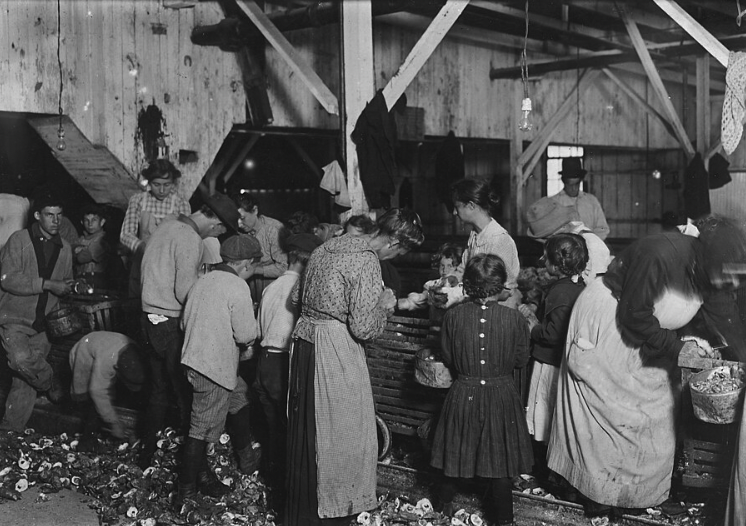
Children fled from his sight in all directions. Some hid beneath shucking tables, and others, who were small enough to escape detection that way, scurried to retreat under their mother’s dresses.
When he had been placated, the head “straw boss” of the factory explained the reason for all this flurry.
Child Labor Law Causes Trouble
“Them kids ain’t old enough to work,” he said, “and they think you’re an inspector. I taught them to run away when anybody strange came into the factory.
“But we haven’t got anything to be afraid of, though, because the Government hasn’t any more authority to make the kids stop working. I’m glad they knocked out those Federal Child Labor Laws. They sure caused up canners a heap of bother while they were in force.”
From Biloxi’s oyster and shrimp canning industries, which aside from tourists comprise the town’s chief support, is estimated to come 80 percent of the country’s supply of this sort of tinned seafood products.
Source: The Indianapolis Times. Indianapolis, Ind. February 15, 1924.