The discovery of a headless body in a bath house along Pittsburgh’s Monongahela River left detectives with a grim puzzle and almost nothing to follow.
The victim was soon identified as 21-year-old Charles “Chuck” McGregor, a young man from Kittanning whose restless travels had taken him away from home months earlier.
Police admitted they had no clear clue and no definite motive, but the strange condition of the body led them into troubling speculation. With McGregor’s head found buried in the sand nearby, a photograph beside the body, and tattoo marks on his arms, including an inscription in Arabic, detectives began tracing his movements in search of someone who may have wanted revenge.
Pittsburgh Police Work on Mystery
PITTSBURGH, Pennsylvania. — With the identification of the headless body found Wednesday in a bath house along the Monongahela River as that of Charles “Chuck” McGregor, 21, city detectives today began the task of attempting to unravel what they believe has the aspect of a mystery.
Admitting that they were without the semblance of a clue, an effort was being made to trace McGregor’s movements since he left Kittanning, Pennsylvania last March, in search of a possible motive.
Difficulty was expected to be encountered because of what James H. McGregor, the victim’s father, who identified the body today, termed his son’s “roving disposition.” Inquiries will be made at Detroit, where McGregor was reported to have been located about three months ago, but detectives admitted that they lacked definite information as to his address or acquaintances in that city.
While detectives declared any motive advanced at this stage of the investigation would be mere conjecture, they were viewing favorably the theory of vengeance.
They said they had learned there is a tribal custom in Turkey, Syria, and Arabia for male members of a family to swear vengeance on any man for certain causes. Whenever possible, the marked man is stripped before or after death and the head severed, according to the custom related by detectives, and then as a mark of disrespect the head is buried in a shallow hole where it can easily be found.
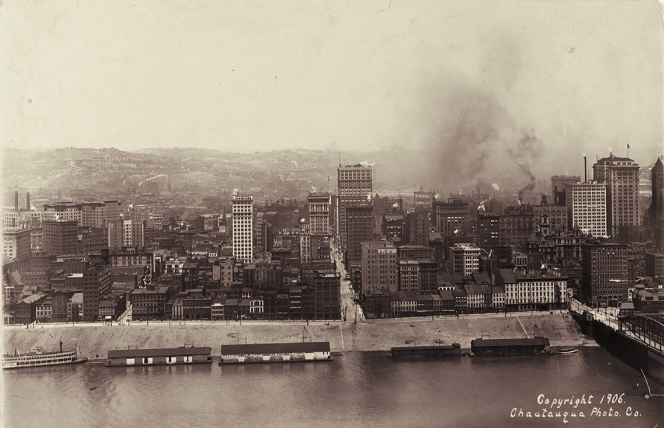
That reported custom, detectives pointed out, would dovetail exactly with the manner in which McGregor’s decapitated body was found in a shed-like structure used as a dressing room at the South Side bathing beach with the head located a short distance away, buried in the sand.
That no apparent effort was made to hide the buried head, it was explained, was shown by the fact that a blood-soaked under garment was found nearby and that a few wisps of hair appearing above the sand first attracted a group of boys to the scene.
Detectives declared, however, that their investigation had not reached the point where they were able to say that any person was seeking vengeance against McGregor, but strength was given to the theory by the fact that a number of tattoo marks were found on McGregor’s arms, among them being an inscription in Arabic, which language experts interpreted as a name.
The identification of the body was brought about by the statement of Miss Inda West, a Philadelphia nurse, that she had given to McGregor a photograph found beside the decapitated body. She declared, however, according to a statement received by the police, that she knew McGregor but slightly and was unable to throw any light on the mystery.
Source: The Laurens Advertiser. Laurens, S.C. October 10, 1923.