Newspapers of the early 1900s often treated unusual lives as curiosities, framing disability, difference, and hardship in language that can feel jarring today. This brief 1902 report from France is one of those pieces.
At the center of the story are two young people preparing to marry in Sos, a village in the department then known as Lot-et-Garonne. The groom, called “Little Toms” in the report, was 25 years old and born in Galicia. Though he had been born without arms and stood less than three feet tall, he earned his living as a musician and was said to play the piano skillfully.
His bride, 18-year-old Marie Lacenthure, was the daughter of a local peasant family. She, too, had been born without arms and was also less than three feet tall. According to the report, Marie was known for her usefulness at home, doing household work and even sewing and knitting with her feet.
The headline, “A Hugless Honeymoon,” reflects the kind of blunt, gawking humor newspapers often used when describing people with disabilities. Beneath that headline, however, is a small glimpse of two individuals who had adapted to difficult circumstances and were beginning a life together.
A Hugless Honeymoon

FRANCE. — One of the strangest marriages is to be celebrated this week at Sos, in the department of Loire et Garonne, in France. It is that of two dwarfs, Little Toms and Marie Lacenthure.
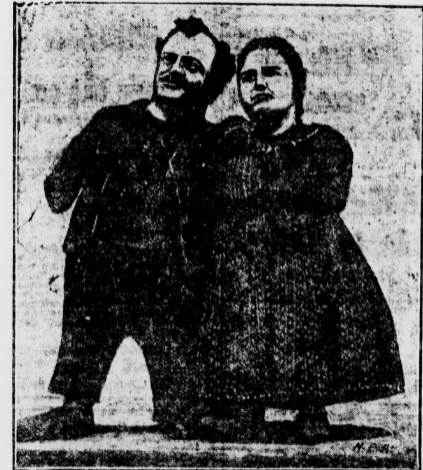
Toms, who was born in Galicia 25 years ago, earns his livelihood as a musician. He manages to play a piano very well, in spite of the fact that he was born without arms. Like his fiancee, he is less than three feet high.
Marie Lacenthure is just 18. She is the daughter of a peasant of Sos, and she also came into the world armless. In spite of this, she has made herself useful in the home of her parents. She can do all sorts of household work, and sews and knits with her feet.
Source: The Spokane Press. Spokane, Wash. November 13, 1902.