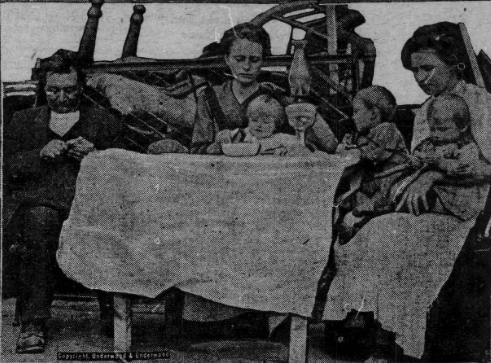
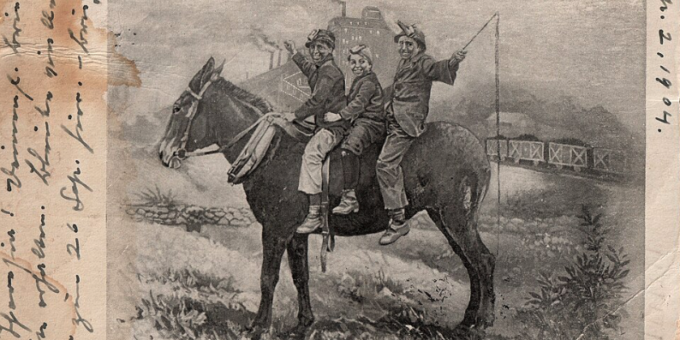
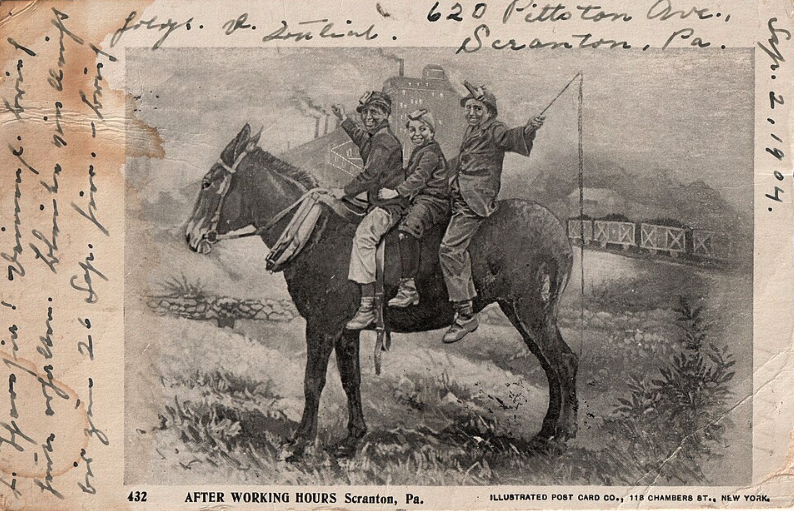
In the hard coal fields of Pennsylvania, where whole towns lived by the whistle of the mines, the question of a miner’s wage was never merely a matter of dollars. It was a question of food, schooling, childhood, and the future of families whose lives were bound to the anthracite industry.
Before the Industrial Commission, John Mitchell was again called to answer for the demands and beliefs of the miners he represented.
Under cross-examination, he stated that $600 a year was fair minimum pay for a miner but because it offered one essential thing: the chance for a workingman’s children to receive a common school education.
That answer cut to the heart of one of the great struggles of the coal region. In mining families, children were often not only helpers, but wage earners. Their small hands and young backs contributed to household survival. To remove them from labor and place them in school could mean hardship for parents already living close to the edge.
Mitchell believed children under 9 years old should not be permitted to mine. Even when confronted with the argument that some families depended upon the earnings of their children, he answered that poverty did not erase a child’s right to schooling.
Industrial Commission
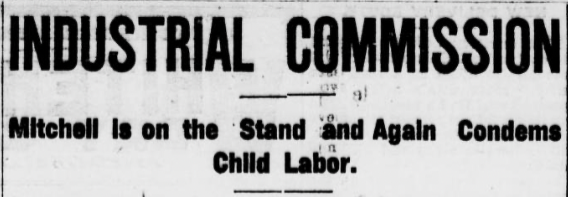
SCRANTON, Pennsylvania. — John Mitchell was cross-examined again today and said that he considered the $600 a year was fair pay as minimum wages to miners, because it enabled them to allow their children a common school education.
He believed that children under 9 should not be allowed to mine.
He admitted that it might cause hardship to those families which children as mostly maintaining, but that does not prove that the child should not receive a school training.
Source: The Spokane Press. Spokane, Wash. November 15, 1902.