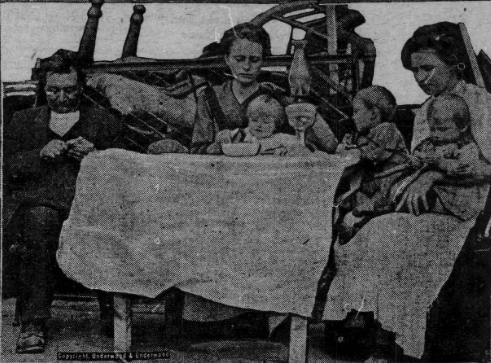
When the roof of Washington’s Knickerbocker Theatre collapsed under the weight of heavy snow, the first alarm came through an ordinary telephone call.
A man outside the ruined building stepped into a booth and told “central” what had happened. From there, a telephone operator took control of the emergency. Within minutes, doctors, hospitals, first aid agencies, the War Department, and municipal offices were alerted.
The speed of the response helped turn confusion into organized rescue.
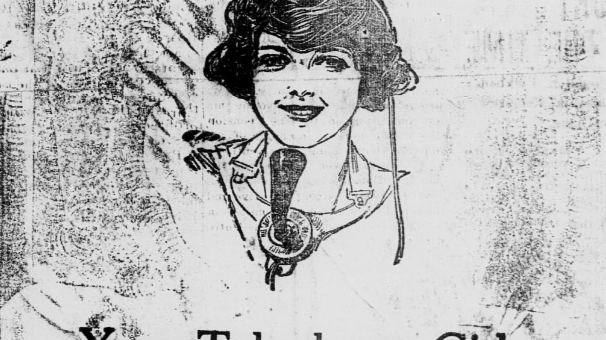
In an age before modern emergency systems, the telephone girl was often the unseen link between disaster and help. She worked behind the switchboard, usually unnoticed and sometimes unfairly blamed, but in moments of crisis, her calm attention could save lives.
The Telephone Girl
Immediately after the roof of the Knickerbocker Theatre in Washington, D.C. caved in under its weight of snow, a man who was standing outside of the building went into a telephone booth and told “central” what had happened. The telephone girl did the rest.
This girl realized the situation, communicated the information to other members of the office force, and within ten minutes 72 physicians residing in the Columbia Exchange District, where the theatre was located, were told of the disaster; every hospital and first aid agency in the city was notified, a report was made to the war department and to the municipal government offices, and the work of rescue and of relief was almost instant.
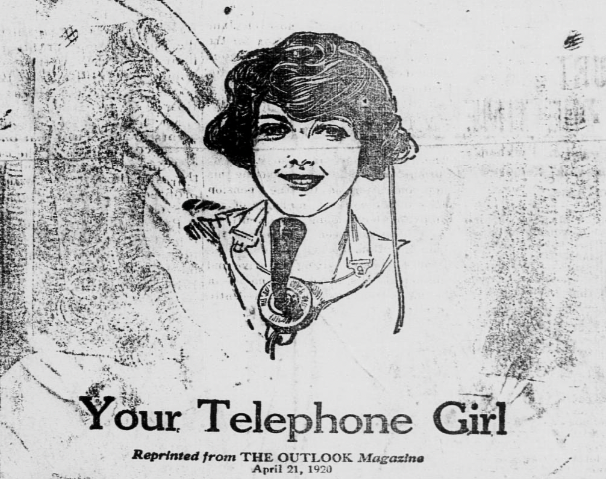
In France the telephone girl proved her courage and resourcefulness in war. She had proved it long before under other conditions of emergency and of peril. In floods, in famine, in fire, and in riots the telephone girl has showed the stuff that is in her.
We fear that we do not always remember these things in our daily communication with Central. Sometimes, however, when we do think of them we are sorry that we have blamed the telephone girl for annoying things beyond her control, such as the fact that the telephone of a friend is busy when we want to talk to them, and that perchance we are given the wrong number when the fault lay not with the telephone girl’s keenly attuned ear but with our own mumbling manner of speech. We hope by this inadequate tribute that we have made amends for a somewhat frequent use of hasty but really unmeant words.
Source: The Chickasha Daily Express. Chickasha, Indian Territory, Okla. February 27, 1922.