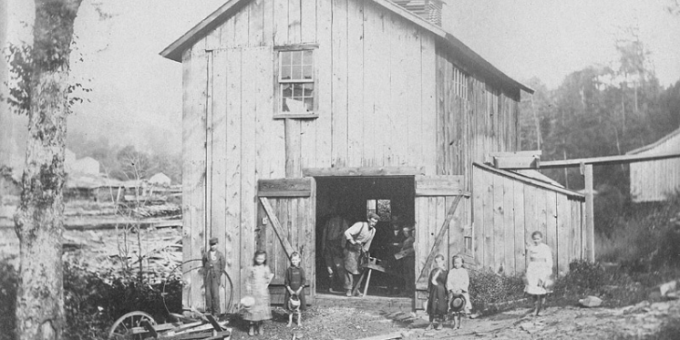
For centuries, the village forge was a place of transformation. Cold metal entered the building and emerged as tools, weapons, horseshoes, and household objects. To people living in earlier times, that transformation could seem almost supernatural.
The blacksmith appeared to command fire and iron. These were two powerful forces that carried deep meaning in folklore. He could heat metal until it glowed, shape it with his hammer, and make something new from what had once seemed unchangeable.
It is little wonder that both the blacksmith and his anvil came to be associated with magic.
According to old superstition, the anvil possessed healing powers. When a child became sick, the family might bring the child to a blacksmith in the hope that the strange power of the forge could drive the illness away and reshape the child into a healthier version of him or herself.
In some traditions, the child was held over the anvil. The belief may have been that the strength of the iron, or the mysterious force contained within the blacksmith’s tools, could pass into the child and restore health.
When the illness was especially severe, the ritual became more dramatic.
The sick child would be laid directly on top of the anvil. The blacksmith would then take his hammer and lightly tap the child three times.
The blows were symbolic.
Just as the blacksmith could reshape damaged or imperfect metal, people may have believed he could also help reshape a weakened body and hammer the sickness out of a child.
The number three was also important. Across European folk belief, actions were often repeated three times to make a charm or ritual effective. A prayer might be spoken three times. A person might walk around an object three times. A healing gesture might be performed in a series of three.
The blacksmith worked apart from most of the community, surrounded by flames and smoke. His physical strength, specialized knowledge, and ability to control iron gave him an unusual status. In stories and legends, blacksmiths were sometimes healers, magicians, protectors, or men capable of dealing with supernatural beings.
Their tools inherited some of that reputation, and the hammer became an instrument of power. The forge was a place of transformation, similar to the re-baking that would take place in the folkloric tales of Baba Yaga’s oven.