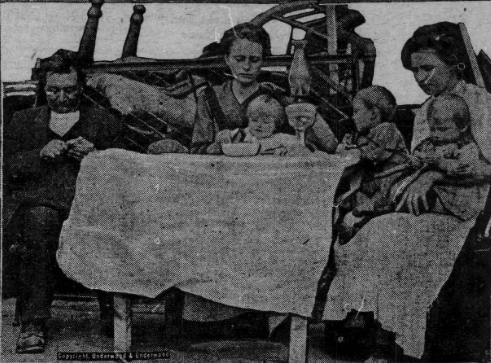

A typhoid fever outbreak in Richmond, Indiana, turned public attention toward an everyday household item: the reusable milk bottle.
In October 1913, health officials linked several cases of the disease to customers of a quarantined dairy. Investigators suspected that bottles washed only with hot water, rather than properly sterilized with steam, may have carried contamination from one home to another.
As milk and water samples were sent for testing, the city health officer announced that every local dairy would soon be required to steam-sterilize its bottles. The order marked a broader effort to bring safer sanitation practices to an industry that delivered milk directly into thousands of homes.
All Dairies Must Sterilize Bottles
RICHMOND, Indiana. — That all dairies not sterilizing milk bottles with steam would be compelled to do so in the future, was the announcement made by City Health Officer Davis today, together with the report of two more cases of typhoid fever which used milk supplied by the William Hartman dairy, now quarantined by order of the state board of health.
It was also ascertained today that about a month ago a complaint was filed with the health officer over the condition of a bottle of milk furnished by Hartman to a customer in the central part of the city.
The woman who entered the complaint informed the Palladium today that she was informed by Dr. Davis after she had told him that the milk had poured from the bottle like molasses, although it was only a day old and had been kept next to ice, that probably there was some stable impurities in the milk and that the matter would be attended to.
The woman said prior to her conversation with Dr. Davis, her husband had had every symptom of typhoid as had a woman living in the neighborhood, who also used Hartman milk. The woman who entered the complaint with the health officer also said that when she asked hm to inform her of some dairy which supplied wholesome milk, her request was refused on the ground that the health officer had no right to supply such information.

Must Be Sterilized
Dr. Davis today could not give the number of dairymen who did not use steam to sterilize milk bottles but he said there were quite a few who only cleaned the bottles with hot water, which is not sterilization.
“Dairymen can be compelled to use steam for sterilization and we will see that this is done,” said the health officer. “We have been busy compelling other reforms in dairy management and now we will take up the bottle question.”
He said it was not necessary for dairymen to purchase steam sterilization machines, that this could be done effectively by placing bottles in a wash boiler and heating the water until it steamed.
Dairy Inspector Flook today forwarded to the state health authorities samples of milk from the Hartman dairy and water used in cleansing the bottles. These samples will be analyzed and a report is expected Wednesday or Thursday. It will then be possible to authoritatively determine where the typhoid epidemic originated.
It is a foregone conclusion, however, that the epidemic was spread about the city in unsanitary bottles used by the Hartman dairy. No Hartman customer who bought milk in the cans in his wagon has contracted typhoid fever. This fact has practically convinced the health authorities that only his bottled milk has been the agency for spreading the disease.
Hartman will not be permitted to sell bottled milk in the future, the health officer stated, unless he properly sterilizes the bottles with steam.
Hartman Resents Statement
Hartman resent the statement of State Pure Food Inspector Tucker that the spring which supplies the water he uses in cleansing his bottles is exposed to the filth of the nearby roadway and an investigation substantiates his statement that the spring is well covered. He also says the strainers Tucker cut from the two pails had not been used to strain milk through, that the pails had been used only for water and that the water placed in them was never used for washing the bottles.
Source: The Richmond Palladium and Sun Telegram. Richmond, Ind. October 6, 1913.