In the years after World War I, the simple phrase “Made in Germany” carried more meaning in Britain than a straightforward statement of where a product had been manufactured. For many shoppers, it could influence whether an item was purchased at all.
By 1924, British markets were receiving large quantities of inexpensive German-made goods, and some merchants apparently found a clever way to make those products more attractive to consumers. Instead of placing the legally required country-of-origin marking where it would immediately catch a shopper’s attention, packaging emphasized the much more appealing words “Designed in England.”
The required “Made in Germany” notice was still there, but according to a newspaper report, it appeared underneath in print so small that hurried shoppers might barely notice it.
The tactic exploited the difference between where something was designed and where it was actually manufactured. A product could legitimately have an English connection while still being produced in a German factory, allowing sellers to highlight the part of its history most likely to appeal to British buyers.
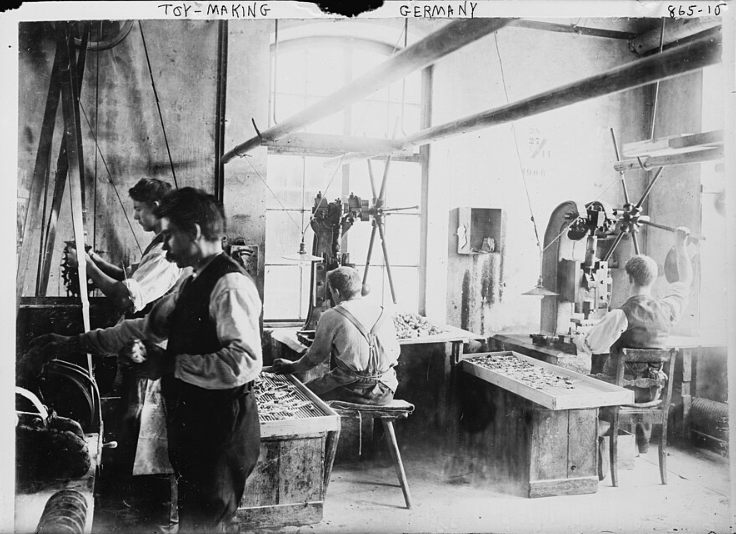
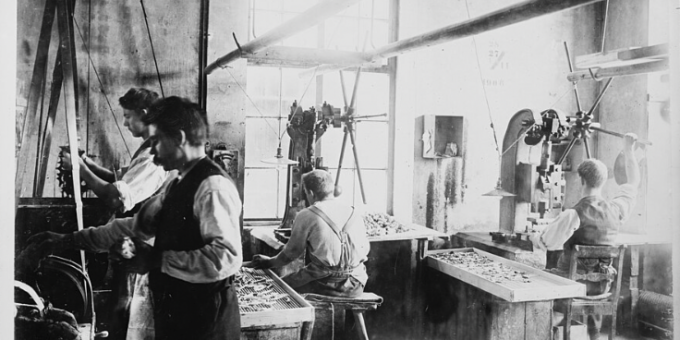
German Toymakers
The complaint also reflected the larger economic tensions of the period. Britain maintained a strong tradition of free trade, while domestic manufacturers faced competition from imported goods that could often be sold cheaply. German industry, rebuilding after the war, was once again supplying consumer products to foreign markets.
For shoppers rushing through stores during the holiday season, however, those international economic arguments could be reduced to two competing labels on a package: one printed boldly enough to be noticed and another apparently designed to be overlooked.
Find Way To Buck German Trademark
LONDON. — There is today a new twist to the familiar expression, “Made in Germany.” Under the English system of free trade, great quantities of cheap German manufactured products are dumped on the English market.
To the casual purchaser during the rush of holiday shopping, the words “Designed in England” meet the eye. In smaller print below, almost unreadable, was the regulation “Made in Germany” mark,
Source: The Beatrice Daily Express.Beatrice, Neb. February 1, 1924.