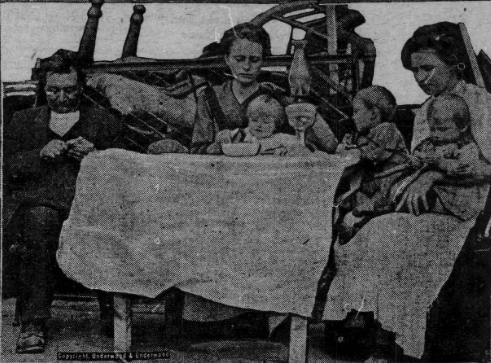
At a small white cottage in Granby, Massachusetts, Miss Abbite Lathrop tended to one of the strangest wartime households in America: a family of roughly a thousand rats and mice.
To her neighbors, she was known simply as the “Rat Lady.” Her sheds were filled with wire-covered boxes. Some of the animals were tame enough to live in open boxes inside the cottage. Visitors, according to the old report, preferred to keep their distance.
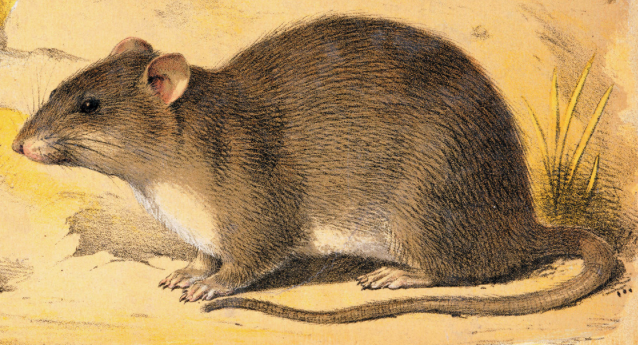
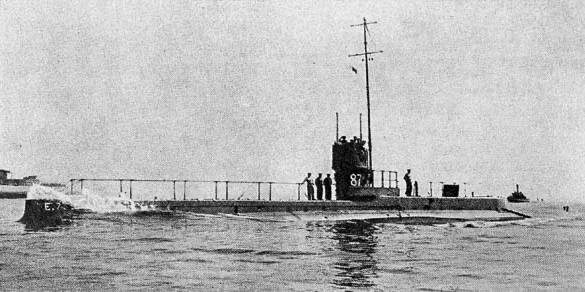
Yet these rodents were more than a curiosity. During World War I, the United States government needed animals for scientific experiments involving air pressure, altitude, and submarine conditions. Rats and mice, being highly sensitive to changes in atmosphere, could reveal dangers that machinery and men were still learning to measure. In aircraft tests, they acted as living indicators of conditions at different heights. In submarine experiments, they helped researchers study pressure, artificial air, and the effects of underwater travel on living bodies.
Miss Lathrop’s unusual business placed her at the edge of a growing scientific world. She had begun raising rats and mice years earlier as a way to support herself, breaking from the expected path for women of her time. By 1918, her Granby cottage had become an unlikely supplier to the war effort.
Woman Helps Win War By Raising Rodents
GRANBY, Massachusetts. — The common gray rat is helping to win the war.
Probably few know that many an airplane soaring high in the sky carries a rat as part of the crew; that rats played and are now playing an important part in the evolution of the submarine, because rats are living barometers.
The United States government is using hundreds of rats in wartime experiments, and many of these are being supplied by Miss Abbite Lathrop, who lives here in a neat little white cottage and cares for a family of a thousand rats and mice.
Miss Lathrop, a native of North Dakota, broke all feminine traditions seventeen years ago when she began raising rats and mice as a means of earning a living.
The “Rat Lady,” as she is known here, keeps her pets in wire covered boxes in sheds near the cottage. She handles them without fear and many are so tame they are allowed to live in open boxes in the cottage, and make no attempt to get out.
Miss Lathrop lives alone and it is understood her feminine friends do their visiting at shouting distance from the “house of a thousand terrors.”
The government uses rats and mice chiefly in air pressure tests. The rodents are unusually sensitive to changes in atmospheric conditions, and at different altitudes exhibit unfailing symptoms which indicate certain conditions of the air pressure.
In submarine depth tests and in the experiments to learn the correct pressure of the artificial air supply of submersives, rats play an important part in establishing facts in relation to human life and the efficiency of underwater craft.
Source: The Cordova Daily Times. Cordova, Alaska. February 6, 1918.