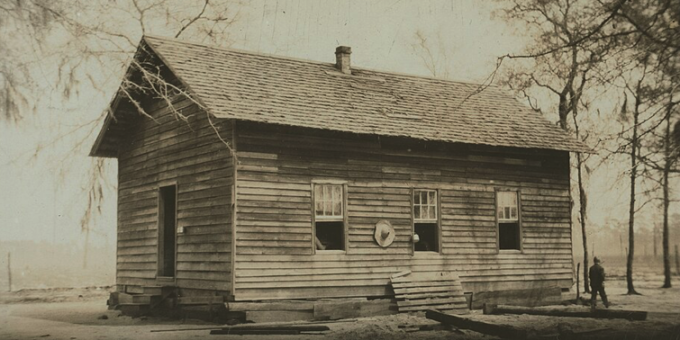
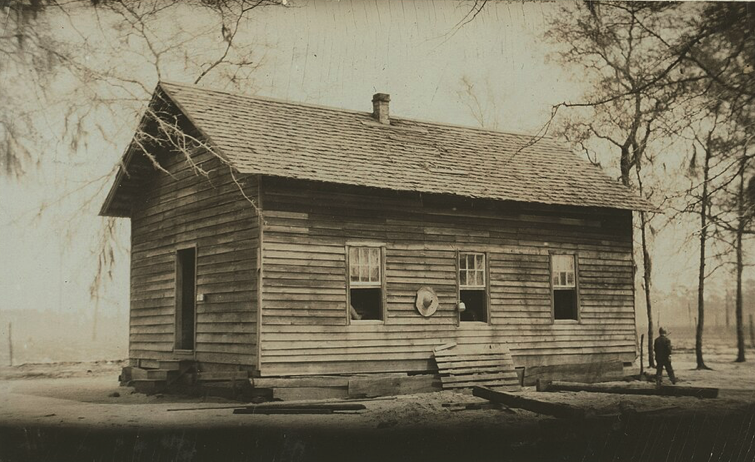
In 1923, a rural school in Monroe County, Georgia, faced a problem its patrons considered both serious and exasperating.
The teachers kept getting married.
According to a newspaper report from Juliette, Georgia, the school had gone through the same difficulty for several years. A teacher would be hired, settle into the position, and then, before long, leave after finding a husband. The result, at least according to local patrons, was a school too often left without a teacher.
Their proposed solution was unusual: hire a teacher with no matrimonial ambitions whatsoever.
The Monroe County Board of Education and the county school superintendent were reportedly asked to find a woman who could resist male attention and keep “wooers” at a distance. One patron was said to have complained that the school was not a “matrimonial bureau.”
What they wanted, he suggested, was a teacher who was either unattractive enough to avoid suitors or sensible enough to turn them away.
It was, the report claimed, the first complaint of its kind ever brought before the county board.
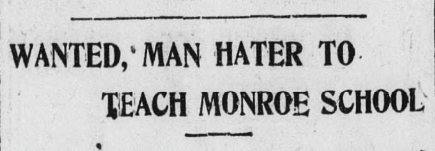
Wanted: Man Hater to Teach Monroe School
JULIETTE, Georgia. — A new and very unusual problem now confronts the Monroe County Board of Education and the County School Superintendent.
It appears that the patrons of a certain rural school in the county desire teachers who have no matrimonial aspirations and are fixed in their intentions to repel all masculine admiration.
It is said that the school is frequently without the service of a teacher because teachers secured by the school invariably marry after teaching only a short time.
Patrons of the school, it is reported have been confronted by such conditions for several years and a patron of the School Board of Education said his school is not a matrimonial bureau and the patrons desire a teach who either by reason of unattractiveness or because she had added sound judgement to her book learning will be able to keep wooers at a distance.
It is the first complaint of the kind ever made to the County Board of Education.
Source: The Cordele Dispatch and Daily Sentinel. Cordele, Georgia. March 16, 1923.