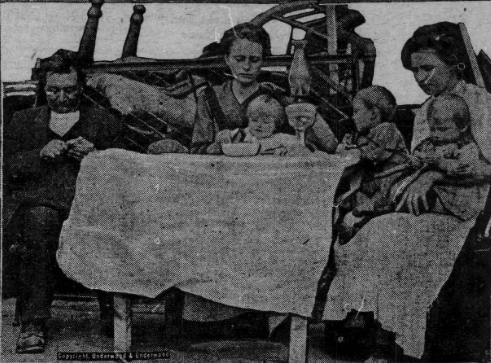
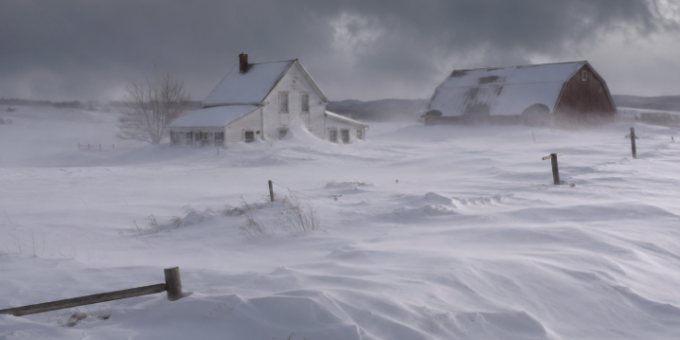
In the winter of 1905, a blizzard could do more than bury roads. It could cut a family off from the world.
Before telephones were common in rural homes, before snowplows could quickly reach every farm road, a heavy storm could turn an ordinary farmhouse into a place of danger. Deep drifts blocked paths. Animals froze in their stalls and coops. A short walk to the barn could become a struggle. A trip for help could become impossible.
That was the situation facing Mrs. Jaggers near Dingman’s Ferry after her husband went out through the snow to care for his horse and came back dangerously ill with pneumonia. Alone, with her husband’s condition growing worse, she attempted to force her way through the snowdrifts to find help. The storm had made the journey too dangerous, and she was forced to turn back, exhausted.
But Mrs. Jaggers did not give up.
With no other way to reach the neighbors, she took down the farm horn and stepped out onto the porch in the bitter cold. For hours, she blew the horn at intervals, sending a distress call across the frozen countryside.
At last, someone heard.

The short newspaper item that follows is a small but powerful glimpse into rural survival during a brutal winter: the isolation, the loss of livestock, the danger of illness, and the quick thinking of a woman who used the only tool she had to save her husband’s life.
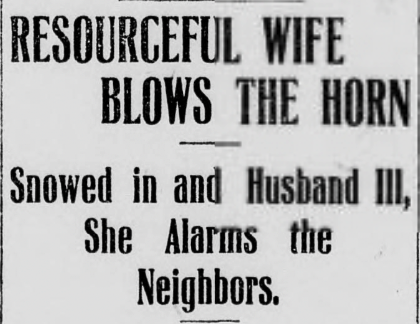
Resourceful Wife Blows The Horn
Tales of hardships during the recent blizzard are still coming in from isolated sections of Sussex County.
A farmer named Jaggers, who lives near Dingman’s Ferry, went to his barn through the drifts to look after his horse and was taken ill with pneumonia.
Mrs. Jaggers, finding that her husband’s condition was critical, tried next day to go through the snowdrifts for assistance, but had to turn back, arriving at the house exhausted.
She then got down the farm horn, and standing on the porch in the bitter cold, kept blowing it at intervals for several hours. Finally neighbors who had heard the distress signal made their way to the house.
The horse was found dead and all the chickens were destroyed by the cold. Mr. Jaggers is now improving.
Source: The New Haven Union. New Haven, Conn. February 27, 1905.