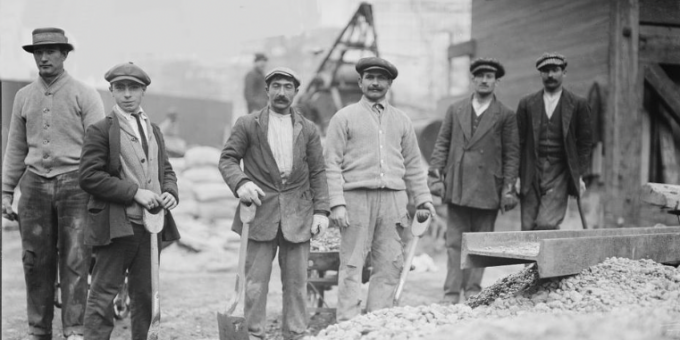
In 1926, Clark was working on the new Eighth Avenue Subway in New York when he climbed into a sand bin to clear a clogged chute.
The loose sand gave way beneath him, dragging him to the bottom and packing tightly around his body until he was completely covered. For more than an hour, his fellow workers dug frantically, unsure whether they were trying to save a living man or recover a body.
What kept Clark alive was a desperate bit of quick thinking. While the men clawed through the sand and hacked at the sides of the bin, they forced a pipe down through the packed mass, giving the buried worker a narrow passage of air.
At last, after ninety-five minutes underground, Clark emerged conscious, carefully conserving each breath until he could be hoisted free.
Man Buried Alive Saved By Air Pipe
New York. — Buried in a huge sand bin for one hour and thirty-five minutes Thursday morning, William Clark, thirty-five, was saved by the cleverness of fellow workers who, while digging for him, inserted a pipe in the tightly packed sand, through which Clark was enabled to breathe.
Clark was at work on the new Eighth Avenue Subway at Central Park West and 81st Street. His duty was to control the chute which allows sand to flow into the concrete mixer to clog. He climbed in and was soon buried, his weight carrying him to the bottom of the pit and the loose sand packing tightly about and covering him over.
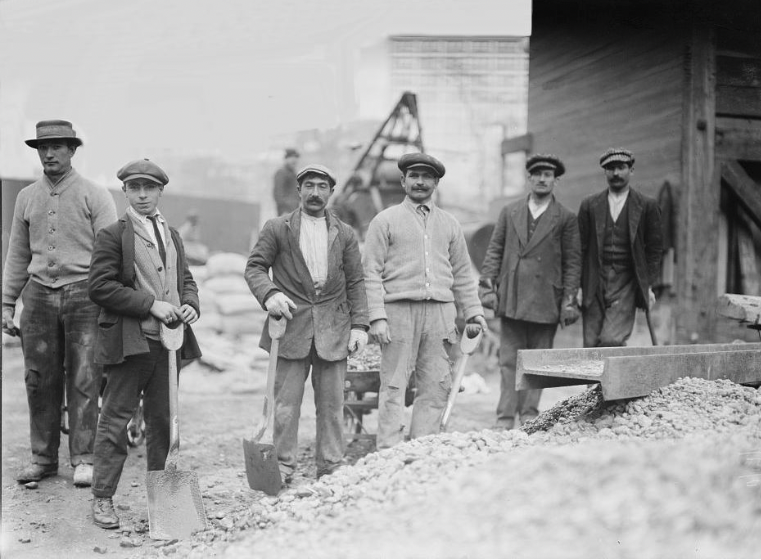
Workmen, realizing his danger, began hacking at the stout sides of the bin, hoping to break it open. For an hour and fifteen minutes the workmen dug at the sand, which seemed to grow deeper, not knowing whether they were digging for a corpse or a man.
Then their labor was rewarded Clark’s head and shoulders appeared and he was conscious, though carefully saving his breath. A barrel was jammed down over his head and shoulders to prevent the sand again sliding and undoing the work of his fellows.
Fifteen minutes later the crew were able to move the entombed man. By this time, a harness and swing had been rigged so that Clark would be hoisted out of the treacherous, clinging, stifling sand. He was swung in the air and lowered to the ground
Source: The Savannah Tribune. Savannah, Ga. September 9, 1926.