Set in the Texas Hill Country, Fredericksburg grew from a mid-1840s German settlement into a town where old customs met a changing frontier.
By the early 1900s, visitors still found a community with its own rhythm: work that began at dawn, evenings that ended with church bells, and weekends shaped by faith, music, coffee, and cake.
A Hill Country town with German bones
Fredericksburg’s earliest homes mixed log and native limestone, sturdy and sensible against flat-topped hills and live oaks. A few landmarks told stories of that past.
The ship-shaped Nimitz Hotel welcomed travelers with an “upper deck” of rooms and a garden that smelled of lilacs and old roses.
Small Catholic and Protestant churches anchored the town, while older octagonal and mill structures slowly yielded to modern storefronts as the twentieth century pressed in.
The uniquely Texan “Sunday house”
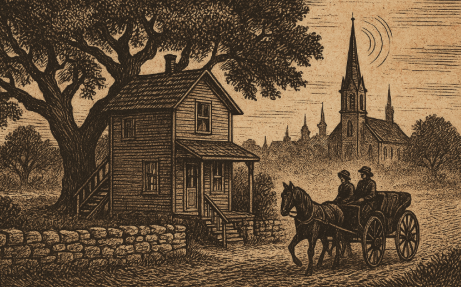
One custom set Gillespie County apart. Farm families kept tiny in-town cottages known as Sunday houses. These were simple, boxy dwellings, often two stories with an outdoor stair.
Families used them on church days, for holiday dances, or when a doctor’s visit or shopping brought them to town. Beds, a cookstove, and a few pans turned a single room into kitchen, parlor, and bedroom.
The idea preserved independence. No boarding bill, no troubling relatives for a couch. When age or savings allowed, many retired from the farm to that very cottage, adding a porch and an extra room for a quieter life.
For those without a Sunday house, several churches built simple dining sheds on their grounds. After services, country members gathered at oilcloth-covered tables to warm a pot, pour coffee, and share the meals they had packed the night before.
Sunday school often followed in the afternoon.
Abendglocken at dusk
Every Saturday at sunset, the town’s bells rang the Abendglocken. The sound lifted over rooftops and creekbeds and marked a weekly pause. Work set aside. Lamps trimmed. A moment of stillness before Sunday.
Coffee circles and the open cookie jar
Gillespie County’s German Texans loved company.
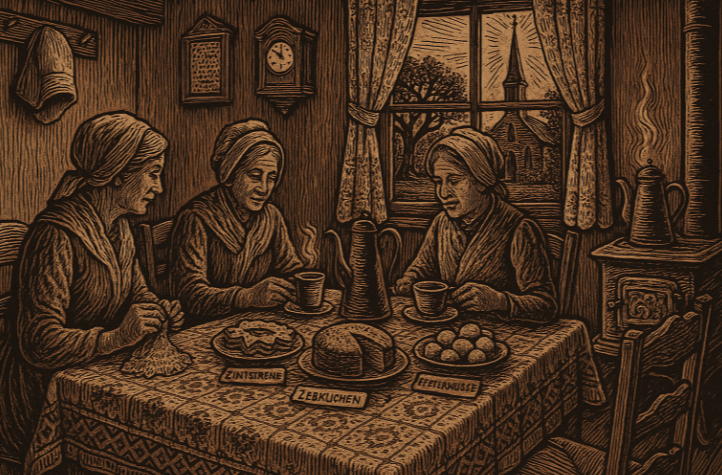
Women hosted Kaffee-Kränzchen — coffee circles where guests chatted, sewed, and then crowded a table generous with homemade breads and cheeses. Dishes reflected farm and forager alike: Schmierkäse (fresh spreadable cheese), wild plum jelly, watermelon rind preserves, and in season, thin slices of home-cured raw sausage.
Coffee flowed. The cookie tin never seemed to empty. Almond loaves, Pfeffernüsse, Zimtsterne, Lebkuchen, and coffee cake made regular appearances.
High days, heavy tables
Weddings, confirmations, and milestone birthdays demanded a feast.
Pork roasts and strings of sausages shared space with turkey or goose. Noodles and potato salads lined the boards. Beans and rice appeared dressed with sugar and cinnamon. Herring salad, chopped with beets, eggs, pickles, apples, and potatoes, rarely failed to show up.
Coffee accompanied everything. Cakes were saved for “four o’clock coffee,” when the table was reset with pyramids of tortes and cookies, plus first plates of sausage, bread, butter, and the house cheeses: Schmierkäse, Kochkäse, and Handkäse.
St. Nicholas, candlelit trees, and Easter fires
Holiday time carried Old-World shape. Second Christmas on December 26, as well as Easter Monday and Pentecost Monday, gave families a second day for visiting and dances after the sacred observances.
St. Nicholas stopped by homes on December 6 with fruit and candy for obedient children.
On Christmas Eve, families gathered in a “best room” lit by candles on a cedar tree for prayers and gifts.
Churches kept their own trees and candy bags for the children.
Spring brought the Easter Rabbit in local style. On Saturday, youngsters picked wildflowers for outdoor “nests.” Bonfires flared on the surrounding hills that night. By morning the nests held brightly dyed eggs, a sight that made the town feel both German village and Texas ranchland at once.
Children’s masquerade
The Kindermaskenball filled a hall with butterflies, brownies, and clowns twirling across the floor until bedtime. Parents spirited little ones home or made pallets of quilts in the dressing room so the dancing could continue.
Music, marksmanship, and a dance to close the day
Shooting festivals drew country crowds to shady groves for brass-band tunes, target matches, and noon meals that resembled a wedding spread. By nightfall, fiddles and wind instruments set the tempo for a public dance.
Choral singing remained a point of pride. Men’s clubs kept the songs their fathers taught them, and seasonal Sängerfeste gathered voices from neighboring communities until the hills threw back the sound.
Theater nights and New Year’s “Sylvester”
Amateur theater thrived for decades under the Casino Club, often with plays performed in German before the chairs were cleared for dancing.
On New Year’s Eve, the Casino “Sylvester” ball filled the Nimitz. Midnight bells rang, lights went out, and the room bloomed with happy shouts and kisses, followed by a proper supper and more music until rooster calls hinted at morning.